
Getting into photography is an expensive business. Long gone are the days when you could pick up an entry-level Canon or Nikon DSLR for a few hundred bucks - heck, now even a fairly typical compact camera like the Panasonic ZS99/TZ99 will set you back around $700! So I completely understand anyone trying to find cheaper options. And if you head to Amazon, you'll find no shortage of cameras which boast impressive specs, yet cost well under $200 (some can even be picked up for as low as $40). Most even have customer reviews averaging more than 4 stars. So are we simply being ripped off by the established camera brands, or are these cheap no-name alternatives too good to be true?
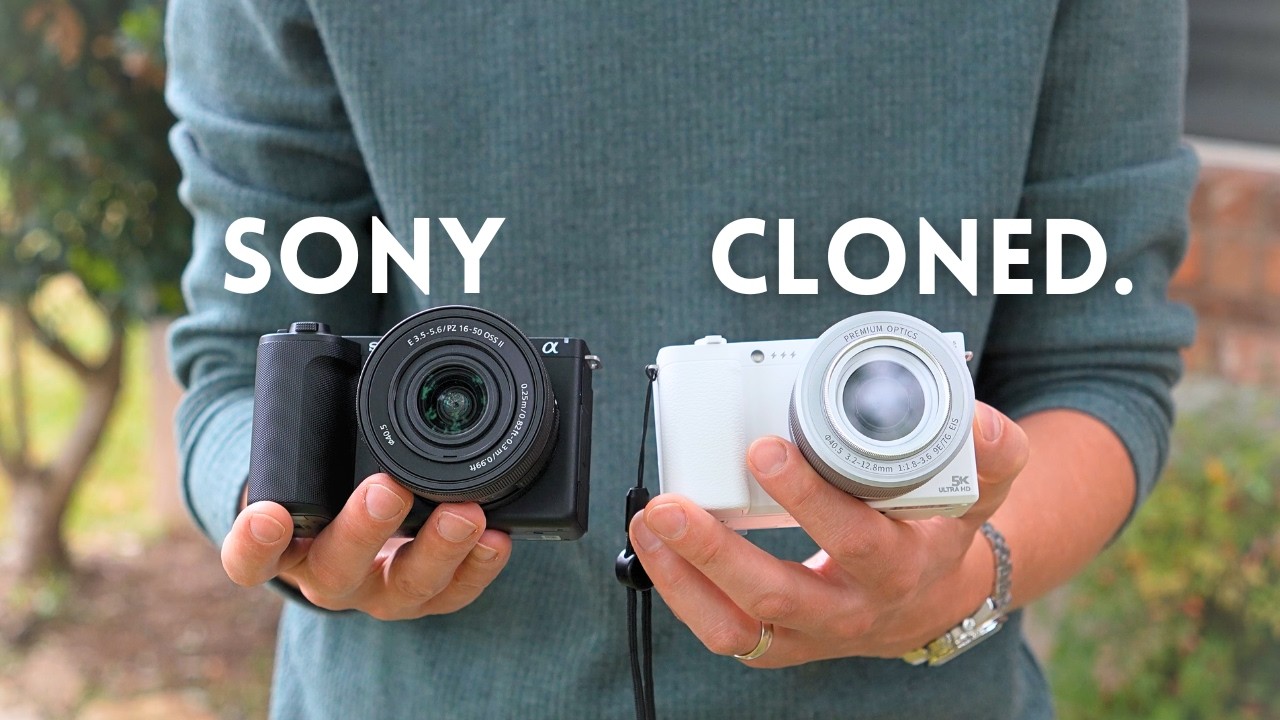
To find out, photographer, YouTuber and Sony shooter Arthur R bought one of these cut-price cameras that's been styled to look suspiciously similar to a Sony ZV-E10. He then did a side-by-side performance comparison with his own genuine ZV-E10 II. For context, the cheap clone costs $130, whereas a proper ZV-E10 II with Sony's 16-50mm kit lens will run you to $1100. Then consider that the clone camera has a 72MP sensor (compared to Sony’s 26MP chip), 6x zoom, and it can record 5K video - Sony execs should be trembling in fear, right? Well, not just yet.

As you could probably predict, looks (and advertised specs) can be very deceiving. The clone camera's sensor is a tiny 1/3-inch chip that'd be more at home in a cheap dash cam than a camera purporting to be serious piece of kit. Though it does produce images with dimensions equating to 72 megapixels, Arthur R clearly demonstrates that there's no way the camera is actually capturing shots at anything close to this resolution.


Judging by the total lack of fine detail visible in the clone camera's images, it's almost certain that the sensor has a true megapixel count somewhere under 20MP, then software is blowing up each shot to 72MP dimensions, just as you could do in Photoshop if you wanted. You're not gaining detail here, just increasing file size - there is no upside. Unsurprisingly, Arthur R also finds the '5K' video is equally devoid of detail - it's also likely 480p footage (or lower), up-scaled to 5K. The clone camera's autofocus reliability is equally disappointing, and the 6x zoom is, at best, only partially optical.

Maybe this kind of overzealous marketing is an isolated case, though? Not from our experience. We've recently reviewed cameras like the Yashica FX-D 300 and encountered a very similar case of a sky-high megapixel rating, but on examining the actual photos they look suspiciously like far lower resolution shots, just up-scaled to match the dimensions of a higher megapixel image.

And this isn’t just us being snobby here. The image and video quality from these cheapo cameras is worse than even a base model Nikon Coolpix point-and-shoot from 5+ years ago (I tested many such cameras back in the day). Considering a camera like that can now be picked up used for a similar price to these cheapo no-name models, if you're on a very tight budget, that's definitely the better option.
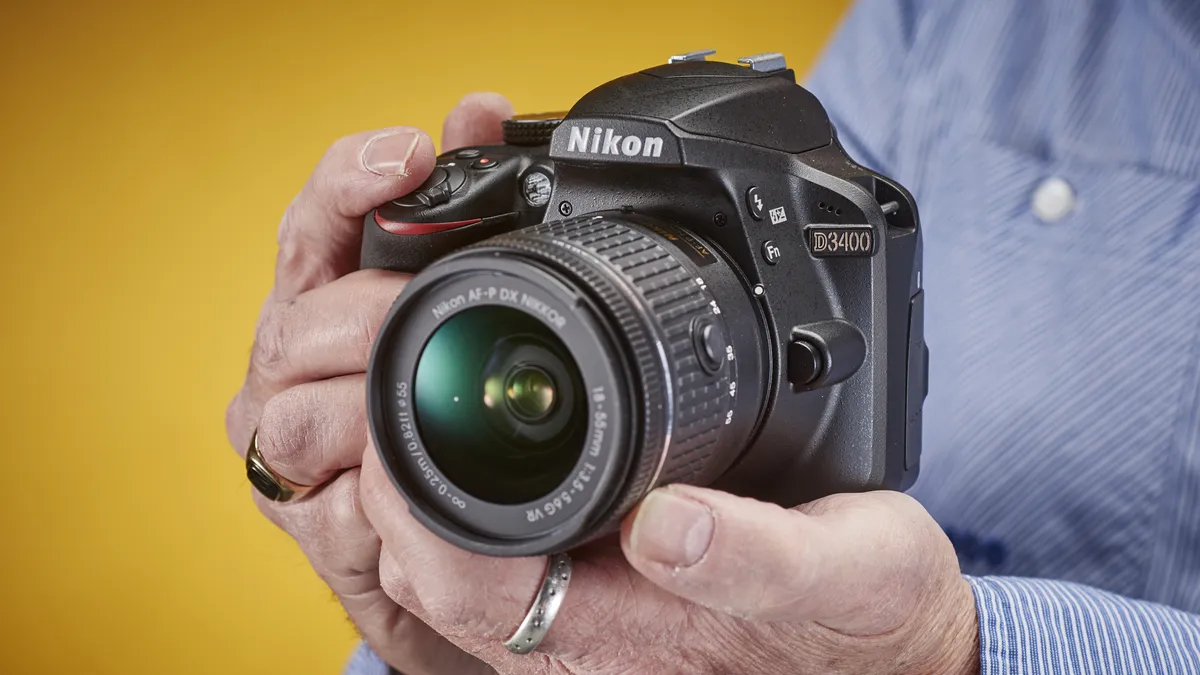
Alternatively, if you use even a modest Android camera phone, it'll almost certainly capture far more detailed shots than a sub-$100 new standalone camera, so stick with that. And if you want to hone your photographic skills with a proper camera that doesn't cost a fortune, pick up something like a used Nikon D3400 with kit lens for around $200 - it'll be a bona fide photographic tool you can rely on, not some plasticky sham that's all marketing and no substance.

