





Christopher Nolan has spent nearly two decades pushing IMAX cameras into places they were never designed to go, from the streets of Gotham to the cockpit of a fighter plane. However, for The Odyssey, the filmmaker faced an entirely different challenge: how do you place one of the loudest, largest movie cameras ever made just a few feet away from actors performing an intimate dialogue scene?
Watch how he did it in the video below:
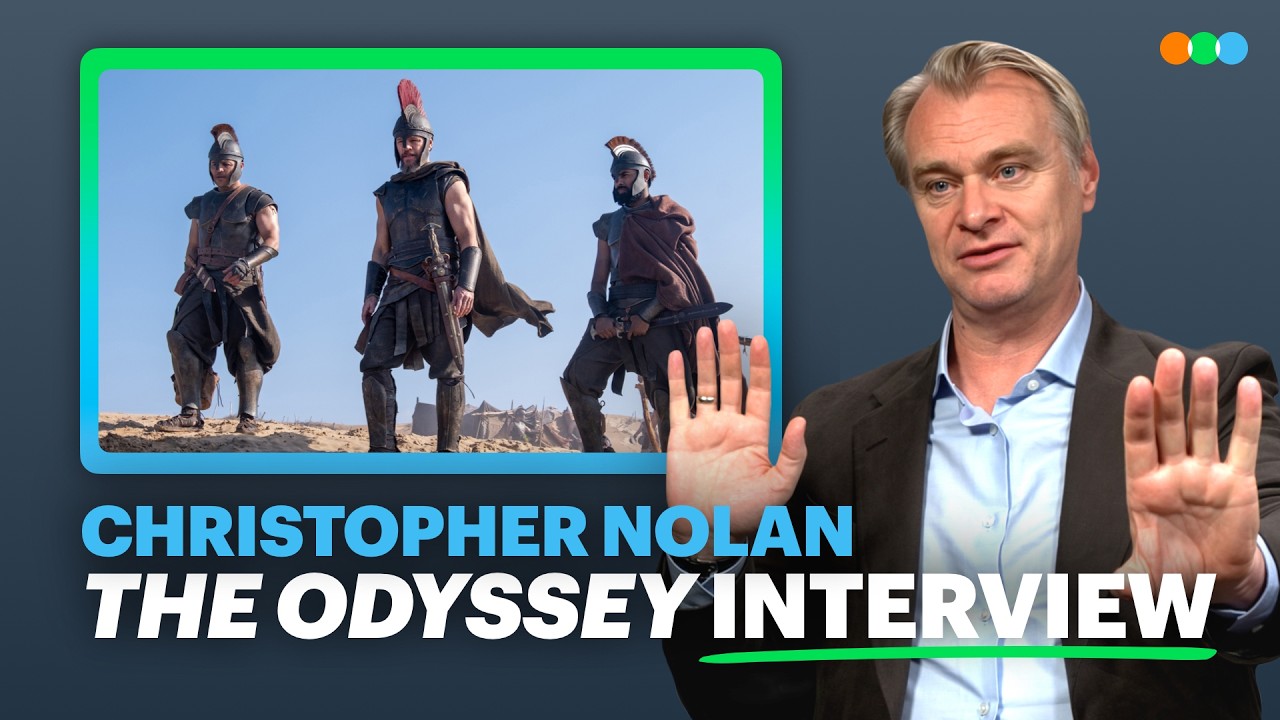
The answer involved building an enormous “blimp” around the IMAX camera to suppress its mechanical noise. Traditional 15-perforation 65mm IMAX cameras pull a huge amount of film through the body at extraordinary speed, producing a level of noise that is manageable during explosions, storms, and action sequences, but almost impossible to work around when actors are speaking quietly.
Nolan challenged IMAX to develop both a new camera and a blimping system that could reduce the sound enough for dialogue to be recorded on set. The resulting setup allowed Nolan and cinematographer Hoyte van Hoytema to position the camera close to the actors without its mechanical roar overwhelming their performances or distracting them during the most emotionally delicate moments.

There was one rather substantial problem: the complete camera setup reportedly weighed more than 300 pounds and created a huge physical barrier between the performers. During scenes featuring Tom Holland as Telemachus, Anne Hathaway as Penelope, and Matt Damon as Odysseus, the actors could not always see one another around the enormous camera housing.
Rather than ask the cast to perform toward a piece of tape beside the lens, Nolan asked first assistant camera Keith Davis and the camera team to construct a system of mirrors. These mirrors allowed the actors to maintain eye contact and perform directly to one another, even when the giant IMAX camera was positioned between them. It was, quite literally, a little cinematic smoke and mirrors used in the service of more natural performances.
Those quiet scenes became the defining test for the entire production. Nolan explained that the crew had already filmed a considerable amount of material on boats and in noisy locations, where dialogue could be cleaned up using modern software. It was only when production reached its most intimate scenes that Nolan and van Hoytema discovered whether shooting the entire movie in IMAX would genuinely be possible.
Once the first of those sequences had been completed successfully, Nolan and van Hoytema knew they could commit to the format for the whole film. The camera could handle gigantic landscapes, violent seas, and mountain locations in Sicily, but it could also capture extreme close-ups and subtle performances without forcing the production to change camera systems.

The result is an impressive reversal of how IMAX has traditionally been used. Instead of reserving the format for spectacular action scenes, Nolan has turned its enormous canvas toward faces, conversations, and personal moments. Behind those images, however, lies one of the most unusual technical achievements of the production: a deafening camera sealed inside a massive blimp, with actors communicating through mirrors placed around it.
For a filmmaker frequently associated with doing things practically, The Odyssey may represent one of Nolan’s most inventive solutions yet. There may be gods, monsters, storms, and ancient mythology on screen, but some of the movie’s most important magic appears to have been created with a giant soundproof box and a carefully positioned set of mirrors.

