





It’s hard to quantify just how much the use of cameras has helped scientists, especially researchers tracking endangered species who otherwise may never get a sighting of the animals in their lives.
And now, thanks to a network of camera traps and, of course, the researchers analyzing the footage, a rare Sunda clouded leopard has been tracked for a record-breaking 6.5 years across the forest of Sabah in Malaysian Borneo.
This marks the longest period of time a single animal has been followed by researchers in any wildlife study.
The tracking formed part of a wider study into Sunda clouded leopards that lasted 15 years, from 2007 to 2023, relying on a total of 13 remote cameras to shed light on the species’ habits and lifespan.
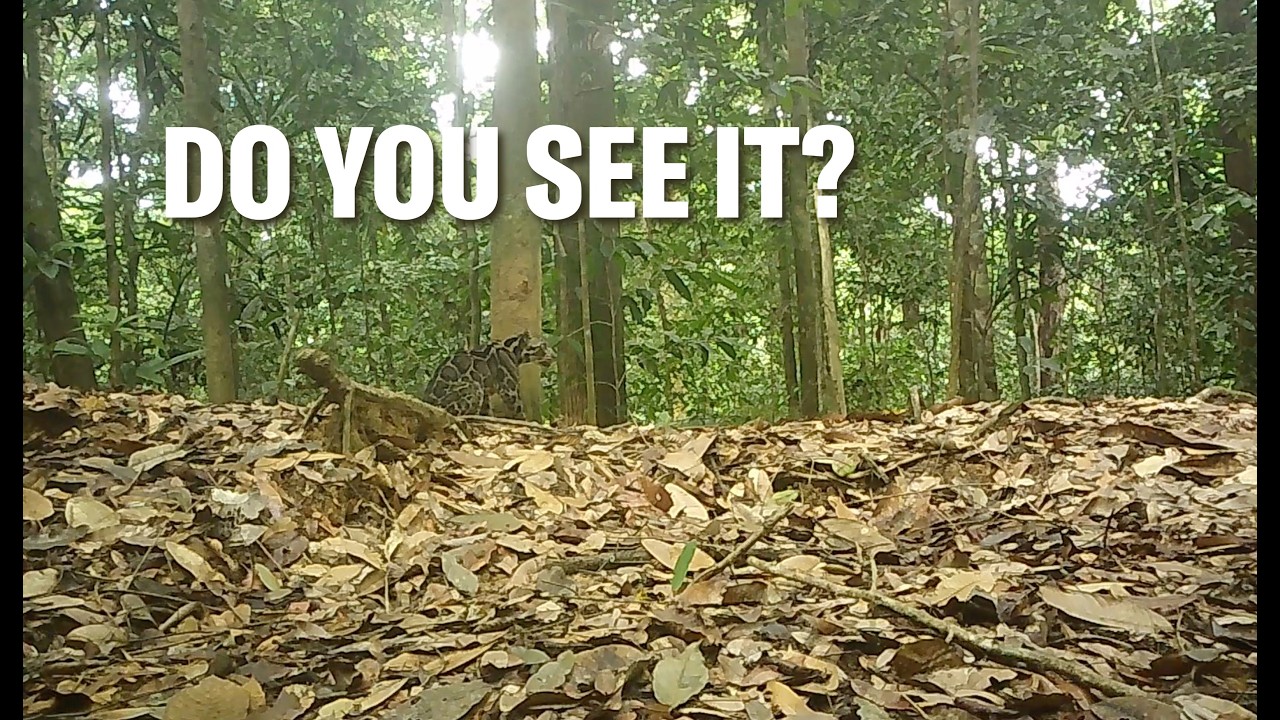
Above: watch the Sunda clouded leopard, also known as the ‘ghost of the forest’ in its natural habitat
One of the study's key findings sheds light on the lifespan of the female Sunda clouded leopards, who are detected by trail cameras 68 percent less than the males.
Using the camera footage across 6.5 years, researchers were able to estimate the age of one female at about 8.51 years old by the conclusion of the study – which is higher than any other of female, and male, for that matter, whose average recorded residence was 5.92 years.
While the researchers have said that there aren't enough members of this species in zoos to draw solid data, a close relative, the mainland clouded leopard, lived to 20 years of age in a zoo, which re-confirmed the general trend of captive cats living about twice as long as wild ones.
The team of researchers, led by the Leibniz Institute for Zoo and Wildlife Research and the Sabah Forestry Department, identified 52 individual adult Sunda clouded leopards (30 males and 22 females) and nabbed a total of 437 images.

Wild cat conservation group, Panthera, contributed data towards the study as well. “Long-term, large-scale monitoring allows us to move beyond snapshots and truly understand how wild cat populations persist over time,” said Dr. Wai-Ming Wong, director of small cat conservation science at Panthera, for an article on the study published by the group.
He added: “Without it, we risk missing the very dynamics that determine their survival.”
Sunda clouded leopards can only be found on the islands of Sumatra and Borneo and, along with the Indochinese clouded leopard, there are thought to be fewer than a combined 10,000 mature adults across the islands.
Following decades of deforestation and illegal wildlife trade, these cats have become increasingly endangered, further highlighting the importance of the recently concluded survey.
You might also like…
Using 30 trail cameras and half a million pictures, researchers finally photographed these rare animals in first-ever camera survey.

