
I seldom shoot at night unless I’m waiting for a sunrise, but I’ll definitely be making the most of the astrophotography on offer this August. From the middle of the month through to the end, there are a host of galactic spectacles to capture with your camera, and NASA has kindly provided its top tips - which we’ve summarized here – to enjoy them.
There are four major events this month: a solar eclipse (August 12), the Perseid meteor shower (August 12-13), Venus shining bright after sunset (August 14-16), and a lunar eclipse (August 27-28). But no matter which event you’re gearing up to photograph, be sure to cast a quick eye over the following pointers to set yourself up properly.
Solar eclipse (August 12)
A total solar eclipse crosses northern Russia, Greenland, Iceland, and northern Spain, with a small corner of Portugal inside the path of totality.
However, you will see a partial solar eclipse in many other places. There's a 90% or more eclipse in Ireland, Great Britain, Portugal, France, Italy, the Balkans and North Africa. But there will be at least some eclipsing of the sun in most of Europe and North America.
Watching safely is key. Use certified eclipse glasses or a safe solar viewer if any part of the Sun is visible. Regular sunglasses are not safe. And never use binoculars, a telescope, or a camera without a solar filter made for the front of the optics.
In-depth guide: How to photograph the 2026 solar eclipse

Perseid meteor shower (August 12-13)
The Perseids happen every year when Earth passes through a debris stream left behind by Comet Swift-Tuttle. As those tiny bits of comet dust hit our atmosphere at high speed, they burn up as bright streaks of light.
To view this meteor shower, look toward the northeast once it's fully dark and watch for the constellation Perseus to clear the horizon. This is where the meteors originate, but let your eyes wander, because they can flash across any part of the sky. For the best view, stay out late as the stars climb higher, find a dark open spot, and give your eyes 30 minutes to adjust.
Venus after sunset (August 14-16)
Venus reaches its greatest eastern elongation, which is its widest apparent separation from the Sun during this evening appearance. Look low in the western sky shortly after sunset for the bright object that will outshine every star around it. Through a telescope after sunset, Venus will look close to half lit, like a tiny lunar phase.
Lunar eclipse (August 27-28)
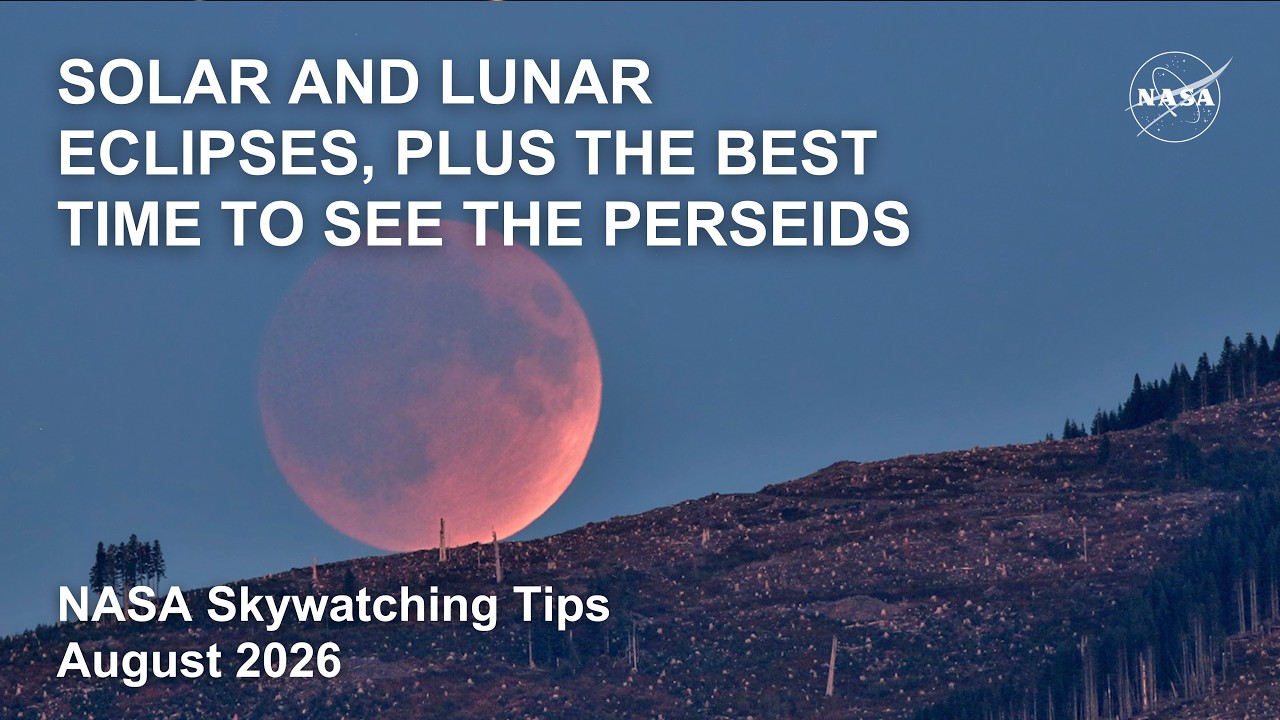
On the night of August 27, continuing into August 28 for some time zones, the Full Moon slips through Earth's shadow, resulting in a partial lunar eclipse. It will be visible from much of North and South America and parts of Europe and Africa. At maximum eclipse, about 93% of the Moon's diameter will be inside Earth's dark central shadow, called the umbra.
The Moon will not be completely covered, but it can look dramatically darkened, with a rusty, coppery tint along the covered edge. Unlike a solar eclipse, a lunar eclipse is safe to watch with just your eyes. Binoculars or a small telescope can give you a closer view of Earth's curved shadow moving across the Moon.
Our tips for shooting this month's astro events
My colleague and experienced astrophotographer, Jamie Carter, has gone into detail on how to photograph all of August's stellar events. Be sure to head here next if you're serious about getting your pictures right on the night.
And don't head off to your astro shoot without first confirming you have the right gear. Our guides to the best cameras for astrophotography and the best astrophotography filters will help you decide.

