
Optical illusions aren’t just for internet entertainment – new research suggests that the patterns in butterfly wings serve as an optical illusion to help the winged creatures avoid predators.
The study was made possible using slow-motion cameras capable of capturing videos of butterflies taking off at more than 1,000 frames per second. The researchers from England’s University of Essex and the University of Exeter recorded the takeoff of five different butterfly species against a green screen background at 1,057 fps per second.
Then, the researchers fed the footage through a bird-vision computer model and compared the movement suggested by the slow-motion footage to how the butterfly had actually moved.
“The first slow-motion video of a butterfly I put through our bird-vision computer model was glowing with downward motion even though the butterfly was moving up,” said researcher Dr. Jolyon Troscianko. “First I checked this wasn’t a coding error, that I’d swapped up and down somehow, but then it dawned on me that this would be a perfect way to confuse attacking predators.”
Troscianko explained that the patterns in the butterfly’s wings create an illusion that works a lot like the “barber pole illusion” – even though the classic red-and-white barber pole is only turning sideways, the stripes appear to be moving upward. On a butterfly’s wings, this illusion can cause a bird to miss the butterfly entirely or hit a less delicate part of the insect.
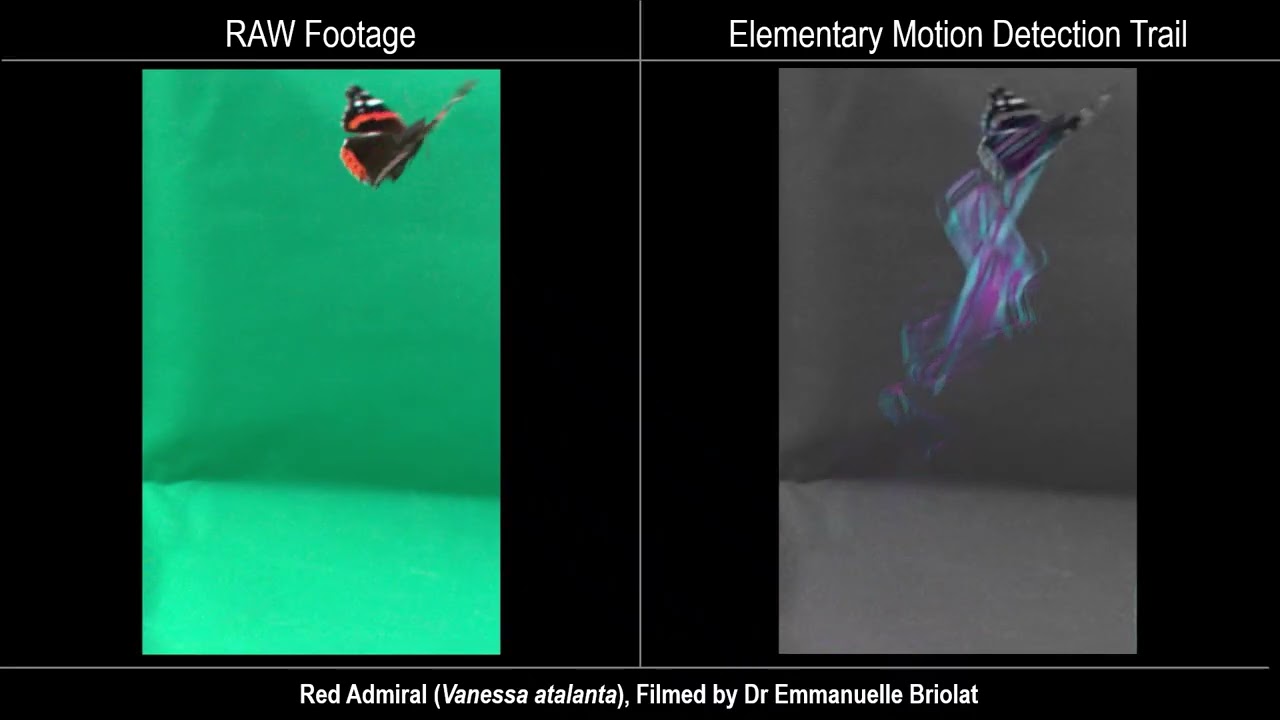
The team looked at five different species – two of which had different patterns between males and females, creating seven different patterns to study. The researchers then looked at patterns for about 400 different European butterflies and found similar patterns that could create an optical illusion once in motion.
The researchers also asked a computer model to “evolve” 50,000 wing patterns, and found computer-generated patterns that were very similar to actual butterfly species.
The research could help answer a longstanding question about butterflies. Many butterflies have muted colors and camouflage patterns on the underside of their wings, helping them to blend in when the butterfly lands. But many species have bright colors on the top side of their wings that seem the opposite of that camouflage.

The new research suggests those bright colors and patterns skip camouflage for an optical illusion designed to make predators miss. The researchers are hopeful the work could open up future work into how patterns across the wider animal kingdom, from zebras to birds, could be a trait built to confuse predators.
The research was published on September 30 in the journal Nature and has already been peer-reviewed.
You may also like
Love photographing butterflies? These are the best macro lenses, picked by real photographers.

