
NASA is building a base on the Moon – and cameras will be an integral part of getting humans there safely.
On Tuesday, May 26, NASA announced a three-phase plan across the next decade to build a permanent base on the Moon. The plan is a massive $20 billion undertaking to build a base near the Moon’s south pole that eventually plans to send humans to the Moon at least every six months.
The announcement could be one of NASA’s most ambitious plans for the Moon yet – and some of the tech that’s making the planned Moon Base possible is an assortment of cameras and massive seven-foot wide drones.
The very first phase, Moon Base I, will deliver payloads to the moon from later this year. That includes the Stereo Cameras for Lunar Plume-Surface Studies. While that name doesn’t roll off the tongue like, say, the NASA-modified Nikon Z9, the camera tech is key to planning safe future landings.
The Stereo Cameras aren’t a single camera but an array of cameras. These cameras are designed to record how the engine plume interacts with the lunar surface.

Understanding how the engine plume interacts with the surface on the Moon in microgravity is pivotal to a safe landing, as that high-speed exhaust could interact with the lunar surface and create flying debris that could damage the spacecraft during landing.
While cameras will undoubtedly also be part of the landers and rovers that will begin landing on the moon in later phases, putting a specialized camera on the first payload to the Moon before those rovers highlights the tech’s importance in studying the Moon from a distance in order to improve crewed spaceflights.
Four massive drones will study the lunar surface
NASA also shared updates on MoonFall, a plan to study the lunar surface ahead of the planned crewed Artemis III mission using a camera of a different sort: drones.
NASA’s Jet Propulsion Laboratory has been developing the prototype drones and has decided to work with Firefly Aerospace on building the space drones. These drones are estimated to arrive on the Moon in 2028 and will use high-resolution cameras to photograph the Moon’s surface, including terrain that would be difficult for traditional wheeled rovers to access.
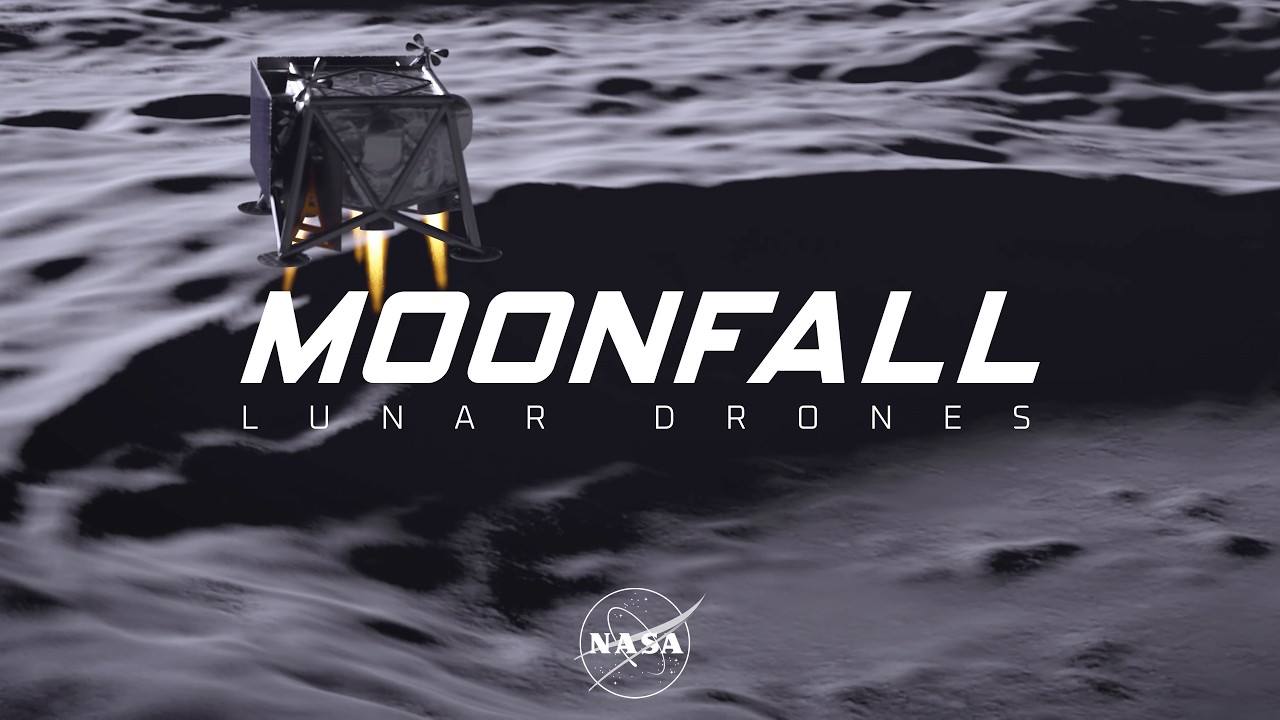
These drones are about seven feet wide (2.13 meters) and four feet (1.2 meters) tall and will house up to ten high-resolution cameras. The drones will be deployed mid-descent from a spacecraft, where the drones will then spend one lunar day – which is up to 14 Earth days – photographing the surface of the moon.
NASA says this camera system will provide more detailed maps of the lunar surface than current satellite technology can provide. The drones will also house other research equipment, including a neutron spectrometer to look for subsurface water and a spectrometer to measure radiation.
The four drones will perform multiple flights during their mission. Once the drones run out of fuel, they will come down to the lunar surface and won’t fly again – but they will remain operational and continue to communicate with Earth.
NASA has only announced the first three phases of the Moon base – but even this early on, it’s clear cameras will help researchers prepare for the Moon base ahead of the crewed landings. If the viral popularity of the photos from the recent Artemis II spaceflight is any indication, Earthlings could be in for a treasure trove of new Moon images.
You may also like
Take a look at the best cameras for astrophotography...with two feet planted firmly on Earth.

