DRONES

Chris Gurton is a photographer from Suffolk who received an honourable mention in the Special Night Photography category of the International Photography Awards last year for his ‘Harvesting at Night’ image. He also came second in this year’s Lumearth photo awards, in the Agriculture and Rural category. “Although photography has become a huge part of my life, I don’t currently do it full-time,” says Chris. “Every opportunity to photograph farming has been built around my day job, which makes the support I’ve received from farmers and the recognition my work has gained even more rewarding. My ambition is to make agricultural photography my full-time career one day, continuing to tell the stories of the people and landscapes behind our food production.”
What got you into shooting farming or agricultural photography as a subject?
I’d always been fascinated by aerial images, particularly the work of French photographer Yann Arthus-Bertrand. His book The Earth From the Air had a huge influence on me, showing how a change in perspective could transform familiar landscapes into something extraordinary. That style of photography felt out of reach because it relied on hiring helicopters or light aircraft. Consumer camera drones completely changed that, giving photographers like me the
Have you developed good relationships with farmers to capture them at work? Building good relationships with farmers has been one of the most rewarding parts of my photography journey. Trust is incredibly important because I’m often photographing people while they’re concentrating on complex tasks with large machinery. They need to know that I’ll work safely, stay out of the way and never interfere with what they’re doing. I think those relationships also help me to create stronger images. Spending time on farms has also given me a much deeper appreciation of the skill, dedication and long hours that are involved in producing our food, and I hope that understanding comes through in the images I make.
What camera equipment do you use?
My main camera is a Nikon D7500 DSLR with a selection of lenses, including a wide-angle and 35mm prime to a 500mm telephoto lens, depending on what I’m photographing. For my aerial work, I use a DJI Air 2S camera drone, which has been an incredible tool for capturing the patterns, textures, and scale of the agricultural landscape. Neither is the latest or most expensive piece of equipment on the market, but I’ve never believed that creating a great photograph is simply about owning the newest camera. It’s far more important to understand light, composition, timing, and the story you’re trying to tell.
Living in rural Suffolk, I’m surrounded by farmland, so it felt natural to start exploring the agricultural landscape from above. I became fascinated by the skill, precision and sheer hard work involved in producing our food, and that’s what I try to capture in my photography today.

What made you interested in covering this subject?
What really drew me to agricultural photography was the opportunity to tell stories that many people never get to see. Most people only see the finished product on the supermarket shelves; I wanted to capture what takes place right at the start of the food production process.
I’ve been incredibly fortunate to receive fantastic support from the farming community. The farms that I’ve worked with have trusted me to document their work in an authentic way, and those relationships have grown over time. As well as creating images for my own portfolio, I’ve also produced photographs for farmers to use across their social media, websites and promotional material.
Chris Gurton's top five tips
1: Ensure safety always comes first
Harvest is one of the busiest periods of the farming year, with multiple machines working together. Never assume you can simply walk into a field with a camera – always ask the farmer or landowner for permission first. If you want to get closer, you have to respect that they’re running a business. Always stay aware of your surroundings, keep well clear of working machinery and never distract operators.
2: Learn how harvest works
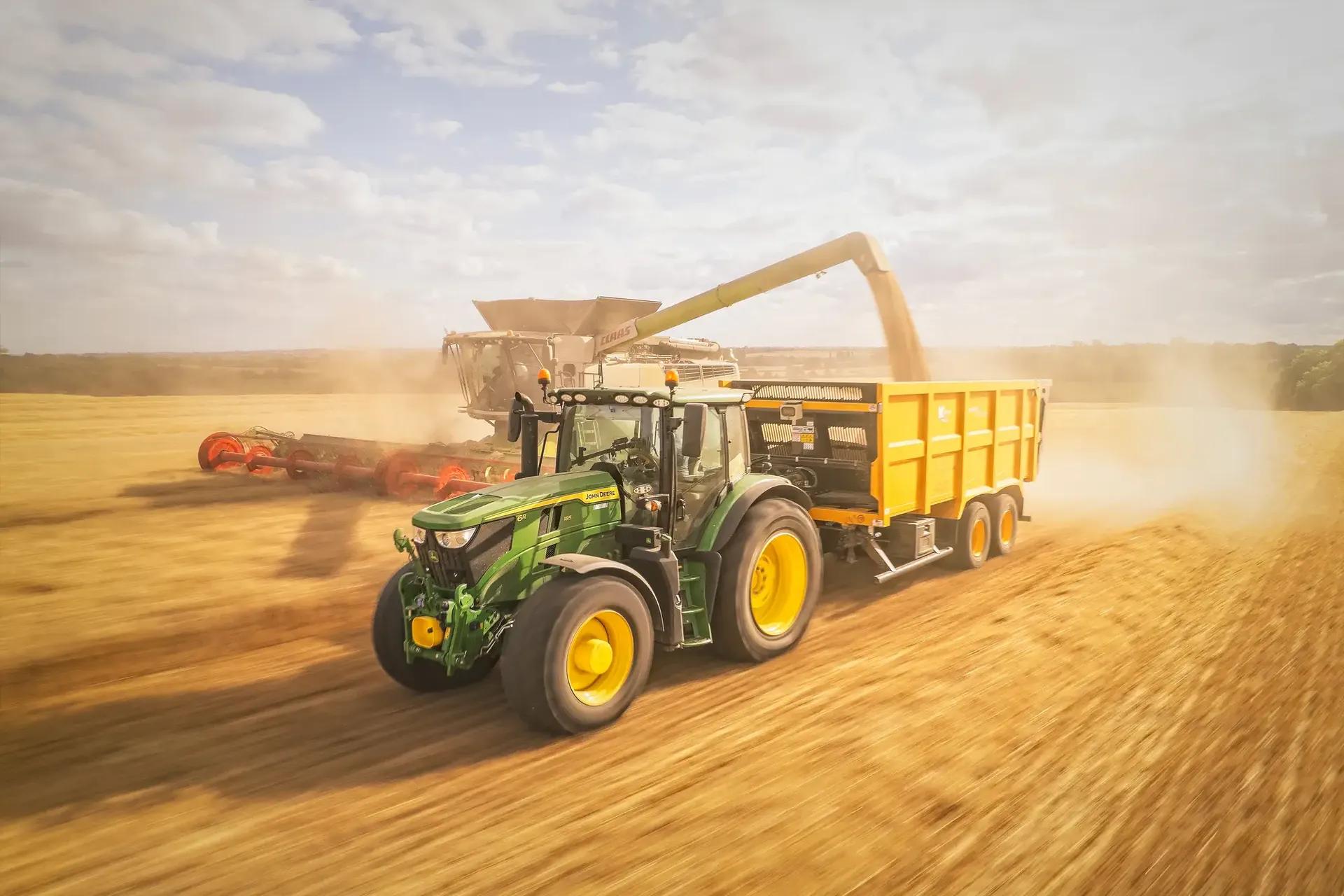
Understanding what’s happening in the field makes a huge difference. If you know when a combine is likely to unload, where tractors will position themselves, or how the crop will be worked, then you can anticipate these moments.
3: Make the most of the light
Some of my favorite harvest photographs have been taken during golden hour or even after sunset. Dust hanging in the air and low-angle light can completely transform a scene, so don’t pack away your camera when the sun starts to disappear.

4: Tell a story, don’t just show a machine
A combine harvester is an impressive machine, but the strongest photographs include the wider story. Look for leading lines in the crop, dramatic skies, birds following the machinery or people working together. These details add context and help viewers connect with the image.
5: Be patient and enjoy the process
Harvest rarely goes exactly to plan. Weather changes, machinery breaks down and the light doesn’t always cooperate. The best photographs often come after hours of waiting, so be patient and keep looking for new angles. If the conditions aren’t right, don’t be afraid to call it quits and return on another day.
Website: www.chrisgurtonphotography.com
Instagram: @chrisgurtonphotography