





Last week, a fisherman went viral after sharing dramatic footage of a fin whale bursting through the surface of the sea during a feeding frenzy off the coast of West Wales.
Rhys Morgan, an oil refinery shift team leader and avid fisherman, was on a fishing excursion near the Celtic Deep, a 100m depression in the sea floor close to the Pembrokeshire coastline, when the whale appeared.
“When they [whales] pop up near the boat, you really do feel small out there,” Morgan told The Guardian, after explaining that he “always” has his drone to hand when out fishing, having bought one in 2025.
However, what Morgan didn’t share with The Guardian, nor in the Instagram post that included the incredible footage, was which drone he uses. We do know from a hashtag included in that Instagram post that he uses a DJI drone, but the exact model remains unknown.
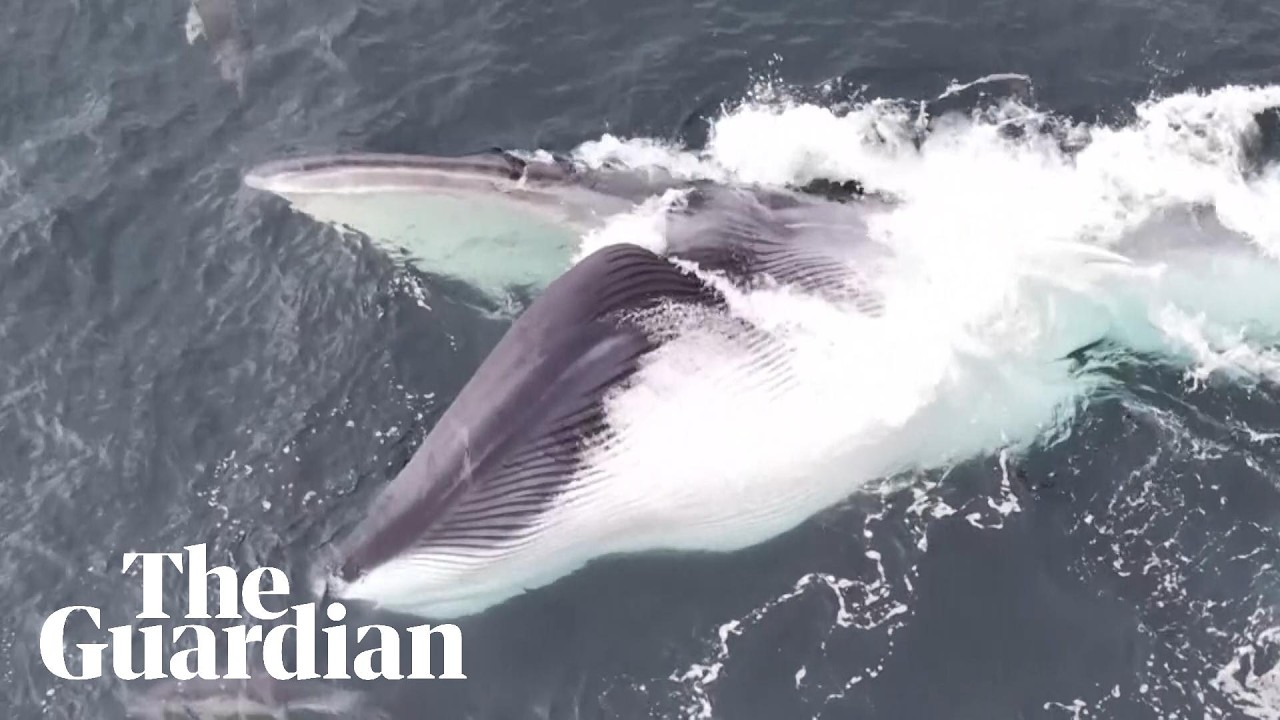
Watch: fishermen Rhys Morgan used a DJI drone to capture this fin whale feeding off the West Wales coast
We do know that Rhys Morgan regularly uses a DJI Air 3S – a drone we recommend for its all-round flexibility – and this is the one we would use in this scenario. This drone balances optical power, stealth, and flight capabilities well, making it a good choice for filming wildlife like whales.
The UK government says all marine wildlife watchers must stay at least 100m (330 feet) away from animals, and that drones shouldn’t be used if they’ll disturb an animal.
The Air 3S features a 70mm medium telephoto lens with 3x optical zoom, which enables capturing tight, intimate footage of whale behaviors – such as breaching, tail slapping, or spyhopping – while keeping the drone positioned more than 100 meters away.
What’s more, with 4K/60fps and 4K/100fps slow-motion recording, as long as the conditions aren’t too harsh, there’s no reason why you shouldn’t come away with crisp footage.
Speaking of conditions, the DJI Air 3S has a Level 5 Beaufort scale rating – the Beaufort scale being a widely recognized international scale ranging from 0 to 12, used to estimate wind speed and its effects on land and sea.
Level 5 means the DJI drone can handle wind speeds of around 19–24 mph (8.5-10.7 m/s), which is standard for most popular mid-to-high-end consumer camera drones.
Of course, there are other solid alternatives for filming the kind of footage Morgan shot of the fin whale, and my other picks would probably be the Autel Robotics Evo Lite+ (for higher budgets) and the Potensic Atom (leaner budgets).
If you want to dive deeper into your options, be sure to check out our in-house drone expert Adam Juniper’s pick of the best camera drones.
You might also like…
Not into drones but love wildlife? We’ve also got a roundup of the best cameras for wildlife photography!

