




Even if you take a hidden camera detector with you on your travels, a study has shown that more than half the time you'll miss a hidden camera – but a new device might be the solution.
The University College of London study, by Akhil Polamarasetty, was presented last month, and showed that 59% of the time, the typical hidden camera detector was unsuccessful because they are "often difficult to operate and hard to interpret."
In fact the comparison is even worse when you compare the success in finding hidden cameras with a device against simple common sense – 66.7% of hidden surveillance devices were missed when participants in the study searched without a detector (so 33% were found), with that only improving by 7% to 58.8% missed when a detector was used.
How do these detectors work, you might ask? There are a number of methods covered in our best hidden camera detector guide, but the main technique is to shine light around the room, and it is up to the user to spot reflections from lenses.
The study also pointed out that these confusing detectors come with an emotional cost. If you're likely to be troubled by the idea of a concealed camera, a confusing device will leave a user troubled. As they put it, "missed surveillance devices can leave [users] at continued risk, while false positives may trigger unnecessary anxiety."

After all, many things can reflect light, so when something is flagged as suspicious even though it is not, "participants sometimes became trapped in anxiety spirals, repeatedly searching the same area without finding an explanation."
Others also look for the RF signals from Wi-Fi, but that can only detect an active camera, not one recording.
Dr Leonie Tanczer, Associate Professor in International Security and Emerging Technologies, suggested that "companies have a responsibility to think about how their products can be misused at the design stage rather than after the harms emerge."
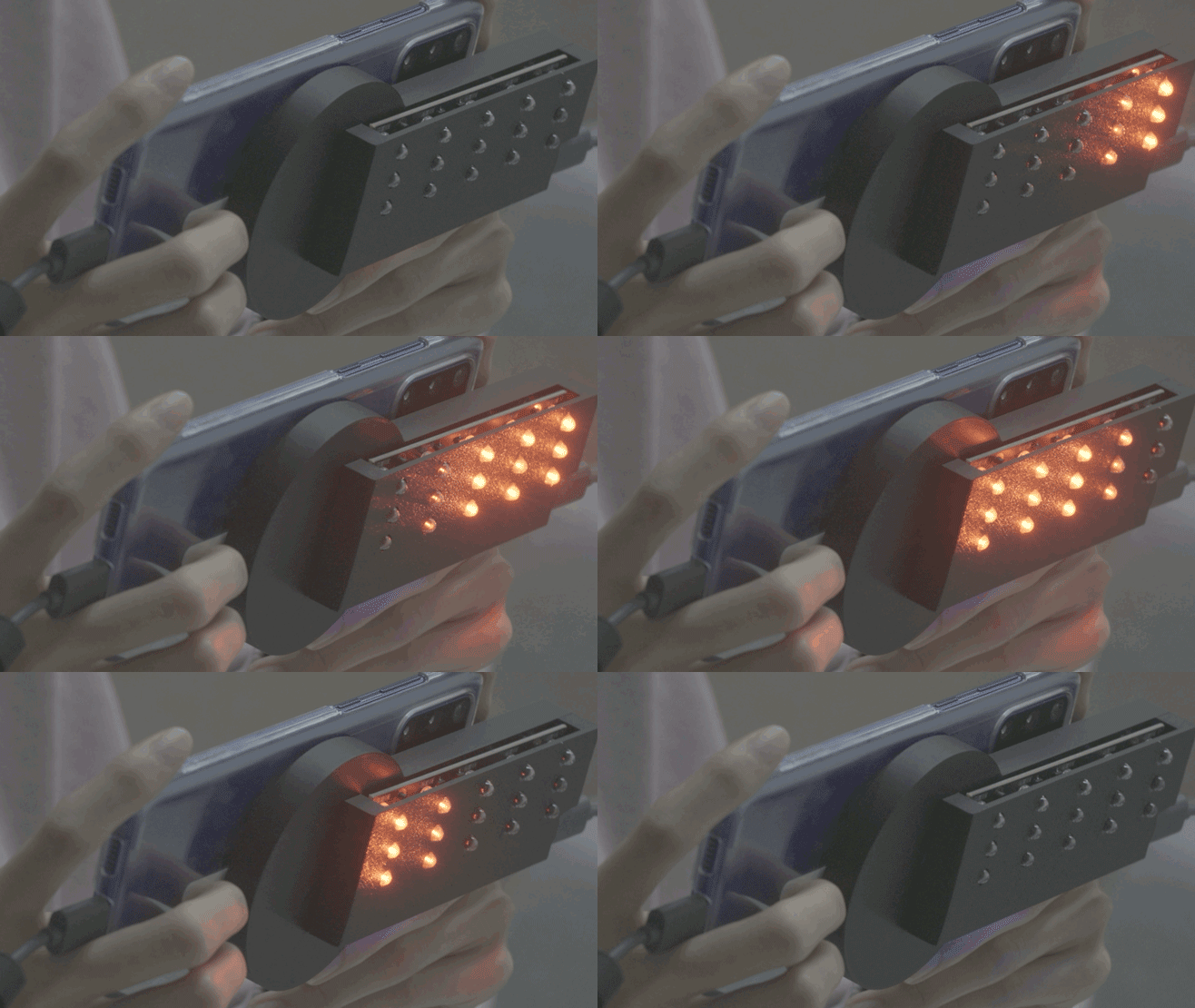
The flip side of this discussion is that AI could be pressed into service to help minimise the mistakes, and a combination of an app and a device – SweepLED – is presenting itself as the solution.
Developed by KAIST, the Korean Institute for Science and Tech, Iand possible to construct for $7, the 'sweep' in question is a small array of LEDs that move the light while using a phone's camera. The result is that a short video is available for an AI-model to examine and, according to the study, 94% detection accuracy is achieved (because the shape of a camera means it responds differently to reflection).
Whether this model will be refined into a product remains to be seen, but the National University of Singapore and Singapore Management University were involved too, so it seems eminently possible.

