







Digital Camera World Verdict
The Moment Macro 75mm is a standout phone macro lens that allows for a longer working distance, providing more freedom in shot composition, especially with tiny subjects like insects and flowers. It utilizes the phone's main camera for better image quality compared to built-in macro modes. The lens compression also helps create a shallow depth of field and natural background blur, which computational photography often struggles to replicate. While it’s relatively pricey and requires a compatible mounting system, it's a compelling choice for serious macro photography enthusiasts.
Reasons to buy
- +
Longer working distance
- +
Beautiful background separation
- +
Excellent optical versatility
- +
Premium construction
Reasons to avoid
- -
Relatively expensive
- -
Additional mount required
- -
Bulky for a phone lens
Why you can trust Digital Camera World Our expert reviewers spend hours testing and comparing products and services so you can choose the best for you. Find out how we test.
Smartphone macro photography has come a long way in recent years, with even relatively affordable phones now capable of capturing surprisingly detailed photographs of tiny subjects. However, while the technology has improved, I've always felt that there is one fairly fundamental problem with the way most smartphones approach macro photography (the iPhone being one of the worst offenders): you have to get far too close to whatever you're photographing.
This isn't necessarily a problem if you're taking a photograph of a stationary object, but it's considerably less practical when you're trying to capture an insect that has absolutely no intention of sitting still while you shove a smartphone in its face. Ultrawide angles are also not the most flattering for macro work.
Moment's Macro 75mm offers a different solution. Rather than focusing on extreme magnification, the lens is designed to provide more distance between the camera and the subject, allowing for a more natural approach to close-up photography.
The Macro 75mm is one of two dedicated macro lenses in its new T-Series II lineup, alongside the much closer-focusing Macro 10x. The two lenses take quite different approaches to macro photography, and while both have their appeal, I think the 75mm is the more interesting proposition.
Specifications
Equivalent focal length |
75mm |
Mount |
Moment T-Series |
Minimum focus distance |
70–100mm, depending on phone |
Weight |
114.5g |
Filter compatibility |
67mm via removable front ring |
Price and availability
The Moment Macro 75mm is priced at $150 / £150. That is quite a lot of money for something that attaches to a smartphone, particularly when you consider that most flagship phones already offer some form of macro photography. However, dedicated macro photography equipment for interchangeable-lens cameras can be considerably more expensive
There is also the additional expense of the Moment mounting system, whether that's a compatible case with a drop-in mount or one of the company's universal adapters.
However, for the quality both in build and in imaging, the Moment Macro 75mm does a lot to justify its price.
Design
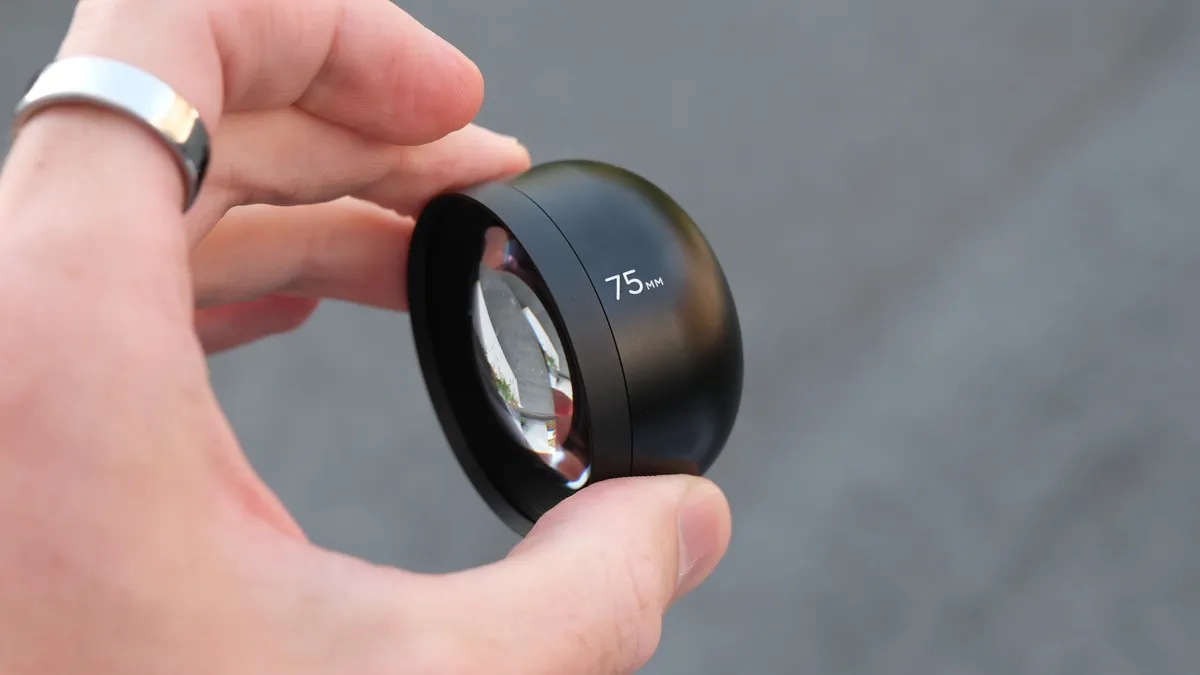
The Moment Macro 75mm is quite a substantial lens, with a 49mm diameter and a weight of 114.5g. That's not enormous compared with a conventional camera lens of course, but it is quite a noticeable addition to something that is otherwise designed to slip comfortably into a pocket.
The lens is constructed from machined aluminum with optical glass, and Moment has clearly taken a more serious approach to its construction than the cheap clip-on smartphone lenses that are readily available online.
Its design is relatively understated, with a black finish and a small red Moment logo providing the main distinguishing features. It looks like a miniature camera lens.
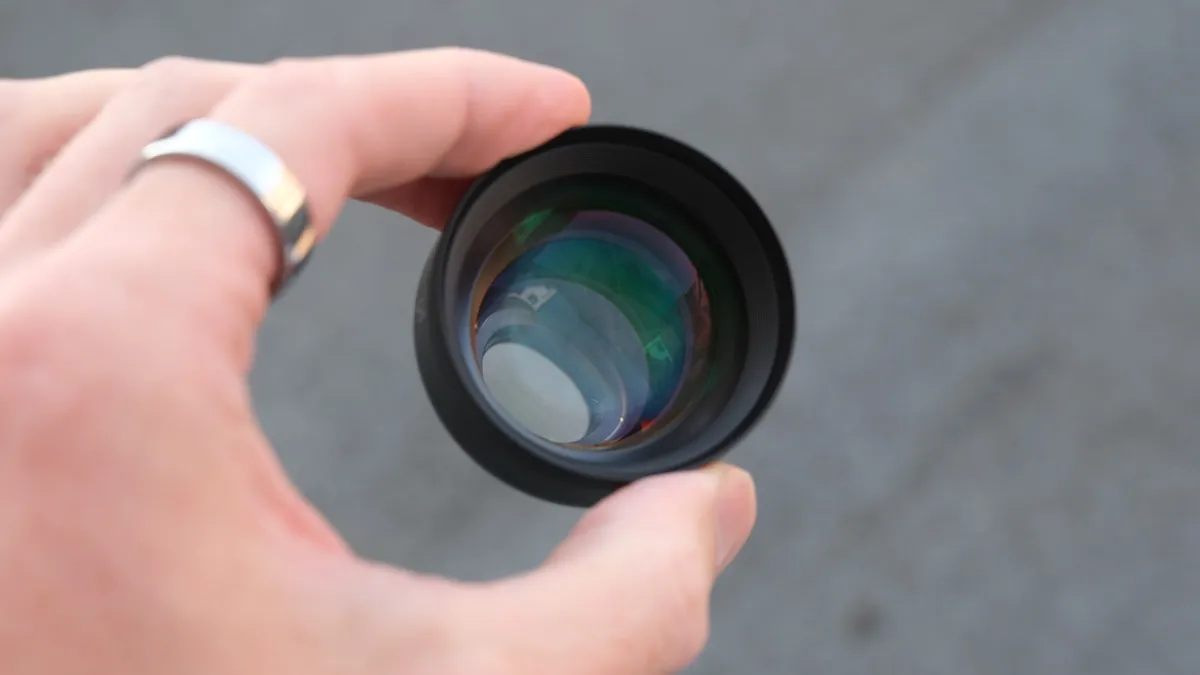
The Macro 75mm has a removable front ring for attaching compatible filters, and the supplied carrying pouch and protective cap make it easier to transport without damaging the glass.
Attachment is handled through Moment's T-Series bayonet mount, which uses a simple twist-lock mechanism to secure the lens over a compatible smartphone camera. This is a considerably more reassuring solution than the spring-loaded clips found on many inexpensive smartphone accessories, although it does require investing in the correct case or adapter.
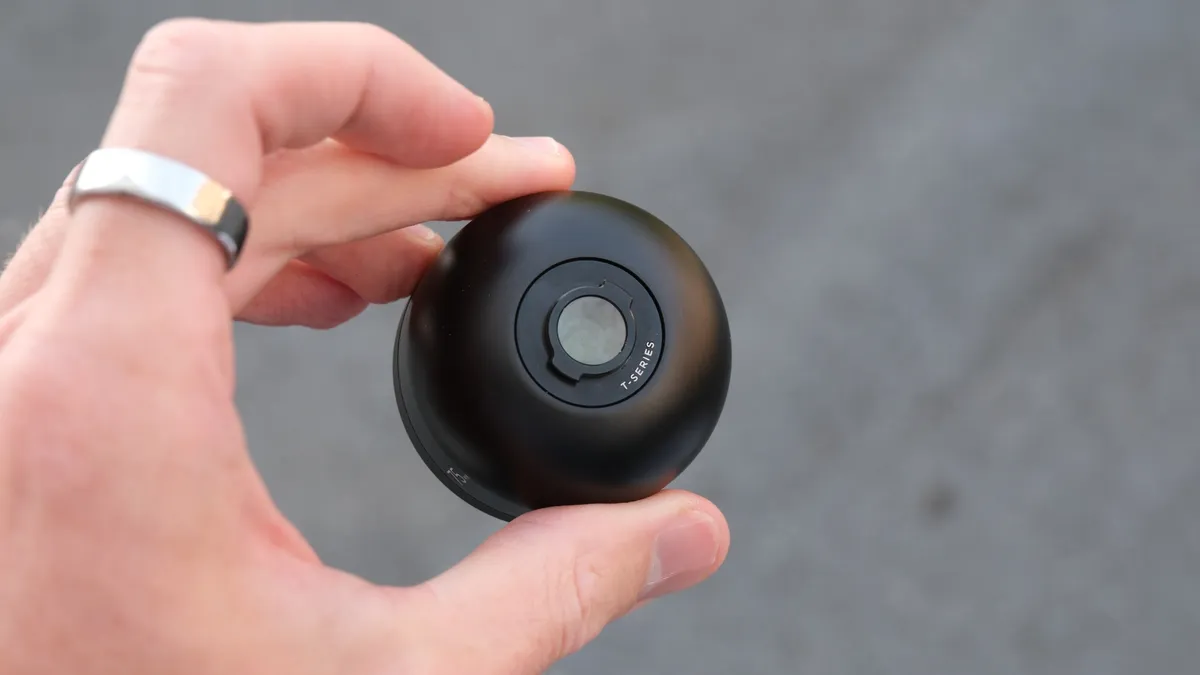
There are no buttons or electronic controls, and focusing is handled entirely through the smartphone camera.
One practical consideration is that the lens is designed to work over the phone's main camera, so you may need to use an app that allows you to lock the active camera rather than letting the smartphone automatically switch between lenses. Moment's Pro Camera app provides this functionality, although it is a separate $9.99 purchase.
Performance
The biggest advantage of the Macro 75mm is the additional working distance. Moment describes the lens as suitable for capturing subjects from approximately four to six inches away, although its published minimum focusing specification is 70-100mm depending on the phone. Either way, you get more room to work than you would typically have with the ultra-wide macro camera on the iPhone.
This is important for several reasons. Firstly, photographing insects and other small creatures becomes considerably more practical when you don't have to put the camera almost directly on top of them.
It also makes lighting easier. Anyone who has tried taking macro photographs with a smartphone will probably have experienced the problem of accidentally blocking the available light with the phone itself, particularly when shooting at extremely close distances.


The 75mm focal length also creates just a much more flattering perspective. Rather than the exaggerated wide-angle appearance of the iPhone ultrawide macro mode, the Moment lens offers a far more compressed image, isolating the subjects and giving a softer transition into the background.
Results look really good, edging towards what I would expect from a macro lens on a proper interchangeable-lens camera – although there are still the hallmarks of phone photography from the small sensor and image processing.


Of course, close-up photography still requires careful focusing. Depth of field can become extremely shallow at these distances, and small movements are enough to affect sharpness.
As the iPhone doesn't track a subject or a focal point in the same way as a camera, this can make nailing focus quite tricky, as any slight movement can just edge it out of perfect focus. You can, of course, use a tripod, but this only works if your subject is going to remain completely static.
Verdict
The Moment Macro 75mm makes a particularly convincing argument for why external smartphone lenses are useful bits of kit, even as the cameras built into modern phones continue to improve.
Rather than attempting to compete directly with an existing focal length, it offers a different approach to macro photography that addresses several of the limitations of conventional smartphone macro modes.
The longer working distance is the biggest attraction, making the lens a more practical option for flowers, insects, and other subjects where you want additional room to compose and not scare your subject or obscure the light. And that 75mm equivalent focal length gives a more flattering perspective than the iPhone's ultrawide macro, and gives some nice, convincing background blur.
It's certainly not the cheapest accessory, and the additional size and mounting requirements mean there is an element of inconvenience involved. However, if I were serious about good macro on my iPhone, the Moment 75mm is what I would recommend.
Features ★★★★★ |
A longer working distance and useful 75mm perspective give smartphone macro photography greater versatility. |
Design ★★★★½ |
Well constructed with a secure mounting system, although relatively large and impractical for a smartphone accessory. |
Performance ★★★★★ |
The optical design offers a more practical approach to close-up photography, with improved opportunities for lighting, framing, and natural-looking subject separation compared with conventional smartphone macro modes. |
Value ★★★★☆ |
At $150, it's expensive compared with simply using a built-in macro mode, but the flexibility it offers makes the investment easier to justify for anyone who regularly shoots close-up photography. |
Overall |
★★★★½ |

