







Digital Camera World Verdict
The Seestar S30 Plus is arguably the best way for photographers to try astrophotography without spending big on specialist equipment. Its improved optics, dual 3.7MP cameras and surprisingly capable wide-angle photography make it a substantial upgrade over the original S30, while mosaic mode and EQ tracking offer plenty of room to experiment. More expensive smart telescopes deliver higher resolution and greater light-gathering power, but the S30 Plus offers almost all the enjoyment and utility for considerably less outlay — and it’s as travel-friendly as it gets.
Reasons to buy
- +
Exceptionally portable
- +
Excellent beginner-friendly app
- +
Versatile dual-camera system
- +
Impressive EQ and Mosaic modes
Reasons to avoid
- -
Lower resolution than Pro models
- -
Planet images disappoint
- -
EQ mode needs accessories
Why you can trust Digital Camera World Our expert reviewers spend hours testing and comparing products and services so you can choose the best for you. Find out how we test.
Astrophotography is one of the most fascinating forms of photography, but getting started traditionally involves a telescope, tracking mount, camera, adapters and plenty of technical knowledge. The ZWO Seestar S30 Plus offers another way. This smart telescope is effectively an entire astrophotography system in one small box, capable of automatically finding, tracking and photographing galaxies, nebulae and star clusters. You don’t even need to know where to point it.
ZWO’s original Seestar S30 made that possible at an accessible price, but its 2MP camera and limited wide-angle capabilities left room for improvement. The S30 Pro addressed that, but comes at a higher price. Now comes the S30 Plus, which introduces dual 3.7MP cameras, improved optics and much more versatile night-sky photography.
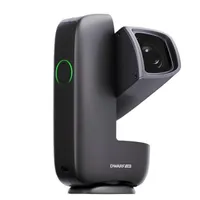
After spending considerable time with the larger, more capable S50 Pro, we found returning to something this small an absolute delight. The S30 Plus fits in a camera bag like another lens or camera body, making it easy to take on trips without a second thought. For photographers who already travel with cameras and lenses, that’s a significant advantage. On that score – and in the same price bracket – only the DwarfLab Dwarf Mini can compete.
At $499/€499, it’s also a relatively inexpensive way to discover astrophotography without committing to a complicated collection of specialist equipment. Better still, it has enough capability to keep you learning for years.
Seestar S30 Plus: Specifications

Sensor |
1/1.25in OmniVision OS08B10 |
Resolution |
Dual 3.7MP (1440 × 2560) |
Angle of view |
3 degrees (main camera), 43.5 degrees (wide camera) |
Optics |
Four-element apochromatic refractor with ED glass |
Storage |
64GB |
Connections |
Wi-Fi, Bluetooth, NFC, USB-C |
Mount |
Mount: Motorized alt-azimuth (EQ mode supported) |
Battery |
6,000mAh |
Dimensions |
210x140x80mm |
Weight |
3.64 lb/1.65kg |
Accessories |
Tripod, padded case, magnetic solar filter |
Seestar S30 Plus: Key features

The S30 Plus’s dual 3.7MP cameras are a substantial improvement over the original S30, offering almost 80% more pixels. That matters because it gives more freedom to crop and examine detail (even if the resolution remains modest compared with a conventional digital camera).
The main camera’s field of view increases from 2.46 degrees to approximately 3 degrees, making it easier to frame larger deep-sky objects. However, the most interesting addition for photographers is arguably the second camera, whose 43.5-degree field of view makes it useful for photographing constellations, star trails and even the Milky Way. It gives the S30 Plus something approaching the versatility of a camera equipped with different lenses, albeit without the same resolution or manual control.
Mosaic mode is another important feature. Instead of accepting the main camera’s fixed framing — which can be limiting for some large objects — you can select a larger composition in the app and have the telescope automatically photograph overlapping sections of the sky. The app combines the resulting images into a larger photograph, allowing much wider views of galaxies and star fields.
There’s also EQ mode, which allows the telescope to track the sky without the field rotation associated with its normal alt-azimuth operation. That makes longer exposures possible, although it requires use of an EQ wedge and a larger tripod than the tabletop affair that ships with the S30 Plus.
The Seestar app handles almost everything else, including locating targets, focusing, tracking, live stacking and image processing. Photographers who want more control can also export FITS files for processing in dedicated astrophotography software. Overall, there are a lot of features loaded into the S30 Plus.
Seestar S30 Plus: Design & handling


Happily, the S30 Plus is small enough to treat almost like another piece of camera equipment. We travel frequently, often to remote locations, and found it much easier to accommodate than the 6.17 lb/2.8kg S50 Pro, particularly when flying. The supplied padded carrying case is useful, with a convenient handle.
That’s perhaps its greatest strength. Taking a conventional astrophotography setup on a photographic trip can involve a dedicated bag and considerable planning. The S30 Plus simply replaces a lens or spare camera body in an existing camera bag. You might not use it every night, but having it available means you can take advantage of unexpected clear skies. It’s identical in size to the original S30 and S30 Pro.
Setup is Seestar-simple. Connect the Seestar app to the scope’s WiFi network, choose an object and the telescope automatically locates, centers, focuses and tracks it. Within minutes, you’re photographing something that might otherwise require a tracking mount, careful alignment and a working knowledge of the night sky. It’s Seestar-speedy.
Although there’s a “tonight’s best” in the app that can be relied upon, it’s also got a Sky Atlas planetarium, so you can manually elect what to slew to. For photographers unfamiliar with astronomy, that’s particularly useful. Rather than spending time researching where to point a telescope, you can concentrate on choosing subjects and experimenting with compositions.
Seestar S30 Plus: Performance


We photographed the Andromeda Galaxy (M31), the Heart Nebula and M52 together and stayed up really late to get an image of the irresistibly bright and colorful Orion Nebula (M42), with great results straight from the telescope. For anyone accustomed to photographing the night sky with a camera and wide-angle lens, being able to capture recognizable detail in distant galaxies and nebulae with so little effort is remarkably addictive.
The improved 3.7MP resolution is noticeable compared with the original S30, particularly when examining stars and finer detail. However, these aren’t photographs designed for enormous prints or aggressive cropping. The attraction is how easily the S30 Plus captures subjects that would otherwise require specialized equipment and considerable experience.
Our favorite experiment was photographing the Pleiades (M45) using Mosaic Mode. Creating a larger composition takes patience because the telescope must collect exposures across multiple sections of sky to stick together on the fly, but the results are impressive. The app shows which sections have already been photographed.


Intriguingly, all images are essentially a work in progress, so you can return another night to add more data. For photographers, that’s an interesting way to work. Instead of taking a single exposure, you’re gradually building a photograph over several sessions. It means you can add data from different times of the year — say, when the object culminates (is at its highest on the sky for the year) — or from a trip to a dark sky destination. It also introduces some of the more involved techniques of astrophotography without requiring you to learn complicated software from the outset.
EQ tracking also worked really well in our tests. Although it requires more setup than simply placing the telescope on its tripod, it offers a useful progression for photographers who want to experiment with longer exposures and improve their results. We used Seestar’s optional accessories, the TH10 Fluid Tripod Head and TC20 tripod.
It’s a nice option to have a wide-angle camera, but we’re not convinced it’s hugely attractive to most photographers. A really good way of working with a smart telescope as a photographer is to have it set up on its own for a number of hours collecting data on, say, a faint nebula, while you concentrate on taking other kinds of images with a manual camera — such as nightscapes. However, the ability to take a star trail using a Seestar is hugely attractive to nightscape photographers, who may not want to waste precious time in a dark sky destination on a star trail using their main camera, but would nevertheless like to create one. The S30 Plus makes it simple.

The S30 Plus isn’t limited to faint and far away objects. We also captured the moon and sun, the latter using the supplied magnetic solar filter, which must always be securely fitted before pointing the telescope slews towards our star. We also photographed Saturn, although the S30 Plus’s 30mm aperture and short focal length aren’t ideal for detailed planetary photography — it just comes out as a bright blob, with no sense of its ring pattern. Its real strengths are galaxies, nebulae and star clusters.
The Seestar app’s image-processing tools continue to improve. During our review, an update introduced S-curve adjustments, although frustratingly these are accessible only after applying AI enhancement. Nevertheless, the images produced directly by the telescope are impressive.
Seestar S30 Plus: Verdict
For photographers curious about astrophotography, the Seestar S30 Plus is an exceptionally appealing way to get started. It removes most of the equipment, expense and technical complexity traditionally associated with photographing the deep sky, while producing rewarding results without much of a learning curve. However, there is plenty of opportunity for learning, with lossless files giving anyone who’s interested easy entry into the Pandora’s Box of post-processing!
Still, the S30 Plus’s biggest advantage is that it’s small enough to accompany you on ordinary photographic trips, taking up little more space than another lens or camera body. More expensive Seestars produce higher-resolution images, but the S30 Plus offers an enormous amount of capability for $499. Its price and feature set make the S30 Plus terrific value — and enormous fun to use.
Features ★★★★½ |
An impressively versatile all-in-one astrophotography system, with dual 3.7MP cameras, mosaic mode, EQ tracking, FITS export and dedicated wide-angle photography modes. |
Design ★★★★★ |
Exceptionally portable at just 3.64 lb/1.65kg, with a compact tripod and useful padded carrying case. Its ability to fit into an existing camera bag is a major advantage for travel. |
Performance ★★★★☆ |
Excellent automated deep-sky imaging, rewarding mosaics and effective EQ tracking. Wide-angle photography adds considerable versatility, although the 30mm aperture and modest resolution limit fine detail. |
Value ★★★★★ |
At $499/€499, the S30 Plus offers photographers an affordable introduction to astrophotography without requiring a separate telescope, tracking mount or specialist camera. |
Alternatives
Check out our full guide to the best smart telescopes

