Sponsor Content Created With

LUMIX vs Sony for hybrid creators: Which camera system should you choose for real-world video creation?

Just about every camera system on the market can take a great photo. And, so long as you’re working on a tripod and shooting simple subject matter, they take pretty good video as well.
When it comes to real-world run-and-gun performance, however, it quickly becomes apparent that not all cameras are created equal – because the needs of hybrid video and content creators can be incredibly demanding.
Hybrid shooters tend to gravitate towards two brands: LUMIX and Sony, which have carved out a great reputation among the creator community. But when it comes down to the nitty gritty, which system really delivers – not just when you’re out in the field, but when it comes to post-production and workflow as well?
Whether you’re an enthusiast upgrading from a smartphone or older camera, you’re a student or side-hustle shooter looking for a future-proof system without breaking the bank, or you’re an experienced camera user looking for the ultimate full-frame hybrid system, here are the key things to consider – and the pain points to watch out for.

Shooting in the field
There are multiple factors to consider when working in live environments, whether it’s shooting a wedding, filming a corporate event or capturing live sport or athletics – especially when factoring in things like weather conditions and shooting duration.
Perhaps the first consideration is stabilization. While many creators will shoot with a gimbal, this sometimes isn’t possible due to size, budget or location restrictions – which means that you’ll need to rely on a camera’s in-body image stabilization (IBIS). This is an area where, on paper, Sony and LUMIX look to be on par, but all IBIS is not created equal.
Historically Sony’s stabilization has been markedly less robust, and is in fact probably the weakest of any full-frame camera system. By contrast, LUMIX’s IBIS is widely considered to be the best on the market. So while the Sony A7 V and LUMIX S1II may both be rated at 8 stops of compensation, practical use reveals that LUMIX’s stabilization is superior.
Autofocus is obviously a key factor, as a camera is only as reliable as the shots it enables you to take. For many years Sony has been regarded as the leader in AF technology, but the balance has shifted with the most recent generations of full-frame cameras. LUMIX completely redesigned its autofocus technology with the S5II and S5IIX, introducing Phase Hybrid AF and new algorithmic autofocus routines for subject detection and tracking.

Indeed, on top of algorithms for human, animal and vehicle recognition, recent cameras like the LUMIX S1II / S1IIE / S1RII have pioneered a new AF routine that can detect urban sports such as skateboarding, parkour and breakdancing – a feature that is not available on any other brand, including Sony.
LUMIX also outperforms Sony when it comes to long-take capture, which is crucial for things like wedding and event videography. Where Sony’s latest hybrid camera, the A7 V, can record 4K 60p for a respectable 90 minutes until it cuts off to prevent overheating. However, cameras like the LUMIX S5II / S5IIX and S1II / S1IIE / S1RII can record virtually unlimited 4K 60p video – with the action only stopping when the memory card fills or the battery depletes.
Thermal performance is something that LUMIX is constantly refining, most recently with a slew of firmware updates for its flagship S1 line to further shore up reliability for long-take videography.
This is part of LUMIX’s creator-focused firmware strategy, which listens to feedback from the community and delivers updates with a regular cadence to offer improved functionality and even brand new creator-centric features – offering a significant advantage over Sony cameras, which have a reputation for infrequent and insubstantial firmware updates.

Workflow and flexibility
Beyond the physical practicalities of real-world shooting, there are also some crucial in-camera realities that hybrid creators need to consider.
First and foremost, LUMIX has led the way with the industry’s breakthrough video feature: open gate capture. This enables cameras like the S1II / S1IIE / S1RII, S5II / S5IIX and S9 to record the entire 3:2 area of the sensor, rather than limiting you to the narrower 16:9 format captured by Sony cameras.
This solves a pain point frequently experienced by creators who output in multiple formats, such as horizontal for YouTube and vertical for social media, which usually requires the same footage to be shot twice with the camera in landscape and then portait orientation. With open gate 3:2 footage, however, the frame has the necessary height to crop down to anything from 16:9 to 9:16 from the original shot.
For those looking for maximum file flexibility, capturing RAW video internally offers the ultimate in editing versatility – even moreso than capturing in a log profile. However, Sony’s leading creator cameras like the A7S III and FX3 cannot record internal RAW – unlike LUMIX bodies such as the S1II / S1IIE / S1RII, S5II / S5IIX and S9, all of which support RAW internally.
While open gate and RAW video offer supreme flexibility in post-production, LUMIX cameras offer numerous tools for flexibility in the field. Chief among these is Realtime LUTs, which enables users to apply color grades at the point of capture – in effect enabling them to skip post-production by performing the grade as pre-production, resulting in faster delivery and turnaround.
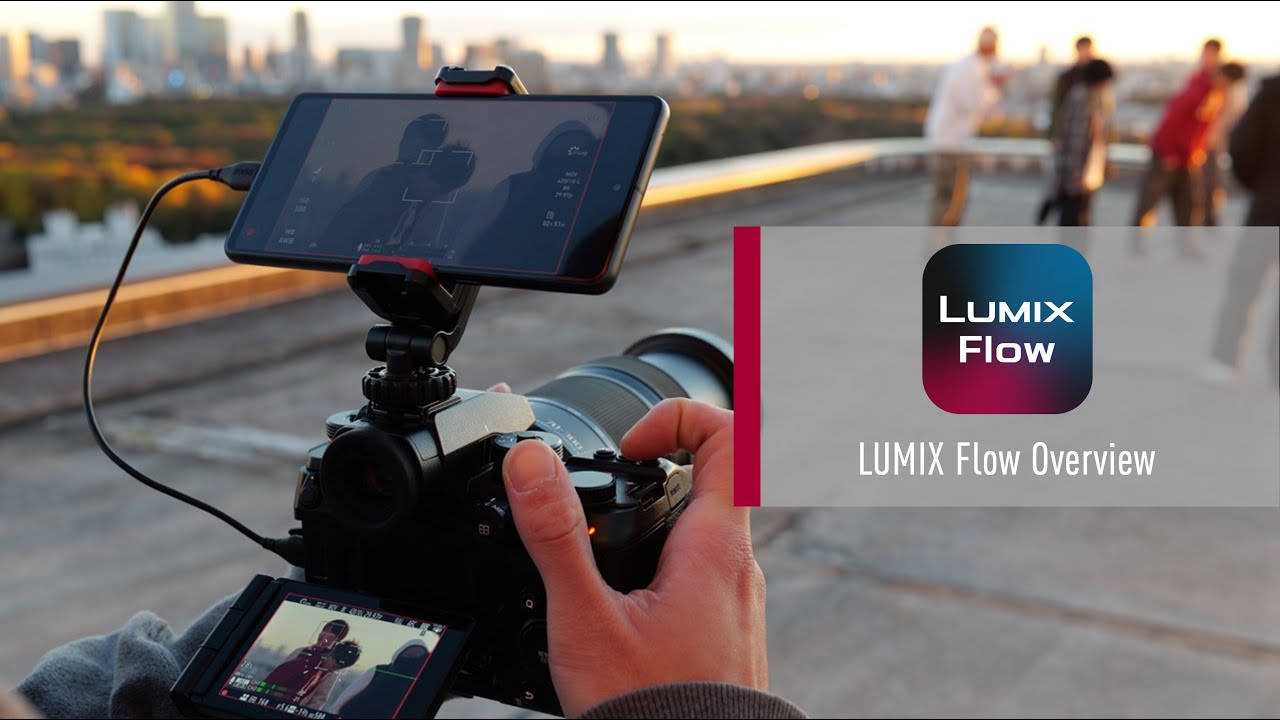
LUMIX also offers numerous workflow apps and solutions to further streamline the video process. Rather than requiring you to export, pay for and produce using third-party tools, applications like LUMIX Flow are native to the LUMIX ecosystem.
LUMIX Flow enables you to use your smartphone as an external on-camera monitor, but you get so much more than just the ability to adjust setting; the app gives you the power to create storyboards, scripts and shot lists, which can be checked and ticked off while you’re shooting to ensure that you never go home without the shots you need. You can even rate shots and export those ratings directly to your editing software, again cutting down your workflow.
Another key advantage of full-frame LUMIX S series cameras is their use of the L-Mount – an alliance of industry-leading imaging partners founded by LUMIX, Leica and Sigma. This offers an extensive lens range with a variety of specialties and price points. From dedicated prime and cinema optics to workhorse “trinity” lenses and prestige performance lenses, LUMIX cameras enjoy a lens ecosystem built by the finest optical specialists in the industry.
Experience the LUMIX difference yourself
LUMIX S cameras empower both solo shooters and collaborative creators to get better shots, faster, and with far less friction in their workflow. More stable video, more shooting time, more flexible footage, more creative options during and after shooting… they are simply the best tools for the job whether it’s hybrid capture, content creation or professional video.
However, the only way to truly appreciate the difference is to experience it yourself. You can try the latest LUMIX products first-hand, absolutely free, with a 48-hour test drive to see just how much creativity you can unlock with the right tools. Visit LUMIX Loan today to see which camera is right for your needs, whether it’s the 44.3MP / 8K power of the LUMIX S1RII or the ultra-compact 24.2MP / 6K LUMIX S9 favored by fast-moving creators.
