
Tamagotchis were back, the Colts were Super Bowl champions and, on every radio station, Rihanna could be heard singing “Umbrella, ella, ella.” What nobody could have predicted in June 2007 was how deliveries of Apple’s very first smartphone, announced at the beginning of the year, would change the face of consumer tech forever.
The end of June marked the 19th anniversary of those first US deliveries. And when I cast my mind back to that golden age of consumer tech, it’s stark just how much things have changed – and not just in the camera industry.
But of course, here at Digital Camera World, the iPhone launch is infamous for one specific reason: it killed the compact camera. Or at least, that’s what we thought…
The camera that's always with you

In reality, it’s hard to select which specific iPhone landed the killing blow (possibly the iPhone 4) but that initial 2007 release was the beginning of the end.
The irony, of course, is that the original iPhone, while groundbreaking in many aspects such as Apple’s slick Multi-Touch functionality, didn’t actually have a great camera. Not only was it 2MP, it didn’t have autofocus and it couldn’t even record video.
For context, the Nokia N95, which was released just prior to the iPhone, had AF, a 5MP camera, built-in flash and video.
It wasn’t until 2010’s iPhone 4 that Apple really took its camera seriously. But I wouldn’t call any iPhone camera particularly groundbreaking. The quality of the camera was never the main draw. It was ever-present and accessible, and that’s what mattered most.
You didn’t have to check that the memory card was inserted and formatted. You didn’t have yet another battery to charge. And you didn’t have to remember to pick it up as you left the door and assign it a pocket.
The camera was your phone, a device that had already weaseled itself into most people’s everyday lives. You now had a camera that didn’t take up any extra space and didn’t require any extra thought. And on top of it all, the iPhone’s incredibly responsive touch controls made taking pictures effortless.
In 2009, Chase Jarvis produced a book called The Best Camera Is The One That’s With You, and the title has become a modern proverb of sorts among photographers. Well, I guess you could call Chase an iPhone photography pioneer and his book perfectly illustrates the merit of merging camera and phone.
The killing blow had been landed. So how on Earth has the compact camera managed such a successful comeback?
The compact comeback kid
When the iPhone launched, smartphones were a novelty. And the camera was a huge part of that. Selfies were a breath of fresh air (kind of) and, for the first time, people could upload pictures of their holiday or dinner onto Facebook in an instant.
Look no further than that entirely pointless app that would turn your iPhone into a virtual flip lighter to know that early iPhone culture was about experimentation and, above all, fun.
But this was a time when we were enjoying smart technology in moderation. Like any addiction, smartphones are no longer fun. The dopamine rush fools us into the feeling, but the pleasure is fleeting and the comedown is real.
We rarely interact with smartphones in a playful manner. They’ve become our bank card, road map and authentication device. Bloated by medical, insurance and grocery store apps.
Not a day goes by that I don’t wonder how this personal and private computer that was bought and paid for by me, has become such an integral part of my working day."
They’ve seeped into the workplace, too. Not a day goes by that I don’t wonder how this personal and private computer that was bought and paid for by me has become such an integral part of my working day. So much so that I simply couldn’t function without it.
And what of the smartphone camera? Well, when it’s not scanning my face, it’s reading QR codes and occasionally I take a picture.
And yet, I don’t like taking pictures with it. Not any more. There’s a laziness in the way that I operate my camera phone. No effort. I simply hold it up, tap the virtual shutter button a few times and move on.
What’s the point? As long as I’ve vaguely framed a composition, I know that the computational photography will ensure that it’s headache-inducingly sharp with exposure blended to within an inch of its life. And… Oh look, I’ve got a WhatsApp message. Urgh, it’s just another PCP scam. Now what was I taking a photo of? Oh, the moment’s passed…

So the camera that’s always with you is now attached to something that’s serious and essential. A vessel for brain rot. In 2026, your smartphone has baggage and it’s impossible not to place that baggage on every aspect of the device – including the camera.
Some look at a dedicated camera, a CD or a vinyl, a Blu-ray or a book and think: What’s the point? It’s all on your phone. That is exactly the point! I am certain we are seeing a rise in these trends because people are consciously or unconsciously separating themselves from their smartphones.
It doesn’t matter whether it’s a compact camera, a keychain camera, an instant camera or, most tellingly, a screen-free camera, people are choosing dedicated devices not just to reconnect with photography, but to reconnect with life.
Can your smartphone offer the sensory experience of tactile buttons and switches, the therapeutic benefits of slowing down and the joy of capturing moments with intent?
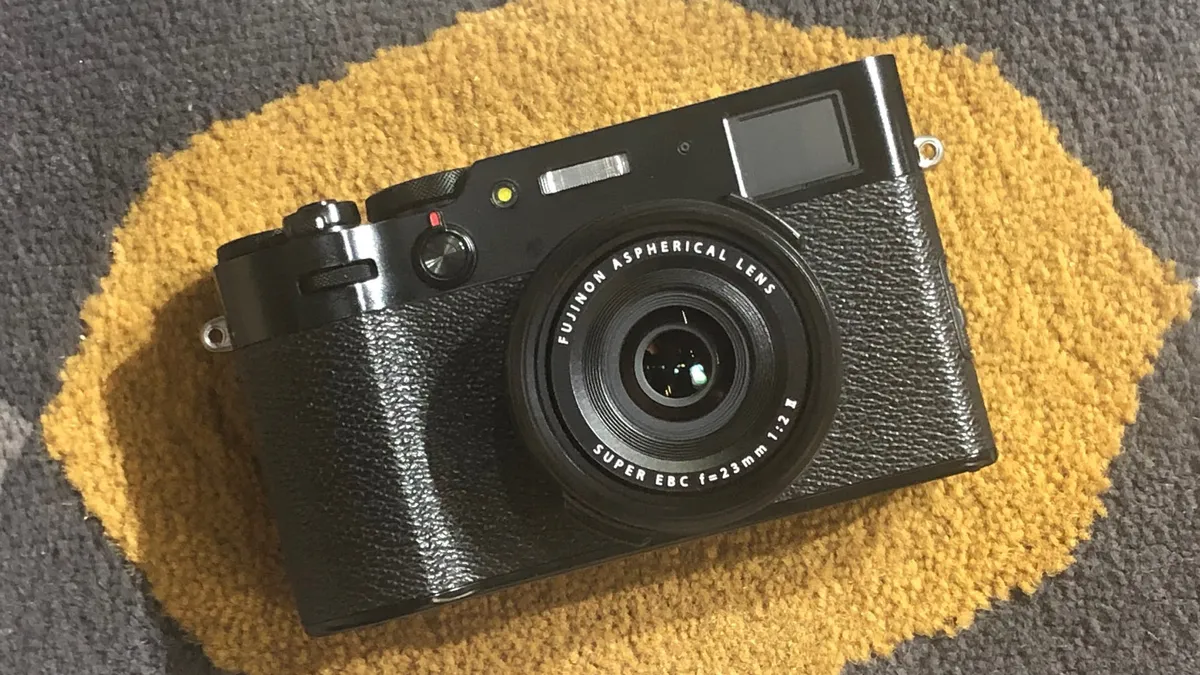
You cannot doomscroll on Fujifilm X100VI. You won’t get a WhatsApp message on a Kodak Pixpro FZ55. And a Polaroid Go Gen 3 won’t notify you of that work email that can wait until after the weekend.
You might also like...
Want more ramblings? It bugs me that Nikon doesn’t have a true entry-level mirrorless camera and here's why you should DITCH your camera screen (sometimes). Plus, here's the latest camera news.

