




Casio was not a camera company. It was founded in 1946, by the Kashio brothers: Tadao, Toshio, Kazuo and Yukio.
Their first product was the “Yubiwa pipe” – a finger ring with a socket designed to hold a cigarette, enabling people to burn cigarettes down to the very nub in a period of post-war scarcity. It seems an almost useless product, today, but it was a great commercial success at the time.
In the 1950s, the firm started making desktop calculators, by the 1970s it had moved to pocket calculators and, in 1974, began making digital watches. Casio's expertise in low-power integrated circuits, LCD displays, keyboards and miniature electronics was the foundation for the digital cameras to come.
But Casio's interest in electronic photography started earlier. At the 1988 Photokina in Germany, Casio showed its VS-101 – an electronic still-video camera that stored images on a floppy disk as analog video signals.
It was designed to compete with Sony’s Mavica and Canon’s Q-Pic (Japan), iON (Europe) and Xap Shot (USA) cameras but failed in the marketplace. Casio had hoped to sell 10,000 per month, but total production was only 3,000-4,000 before it was discontinued and was never successfully sold in any quantity outside Japan.
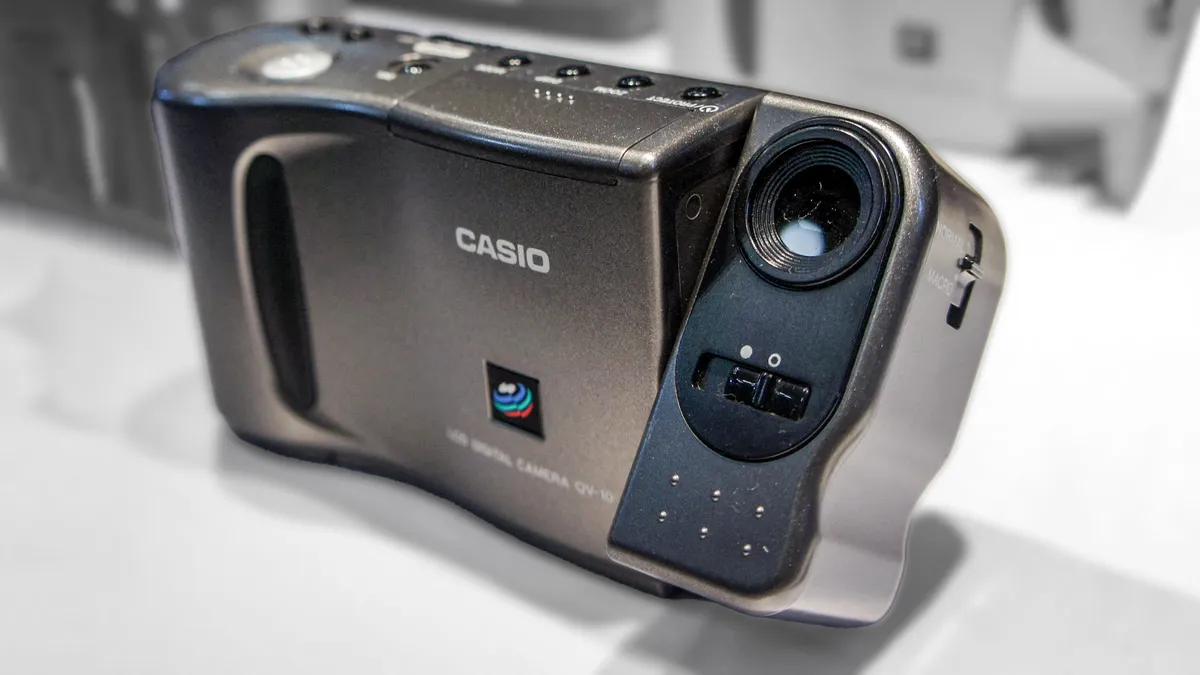
The breakthrough came in March 1995 with the Casio QV-10, the world’s first consumer-grade digital camera to come with a rear LCD for previewing and reviewing images. The 250,000-pixel camera featured a 1.8-inch rear screen and cost ¥65,000 (nearly $700). It may sound ordinary, today, but it was revolutionary in 1995 and Casio sold around 200,000 QV-10s in its first year.
But Casio's strength wasn't optics. It was the miniaturization of electronics and consumer-product design expertise behind its calculators, watches and pocket electronics. And that led directly to Casio's second major contribution to camera history.

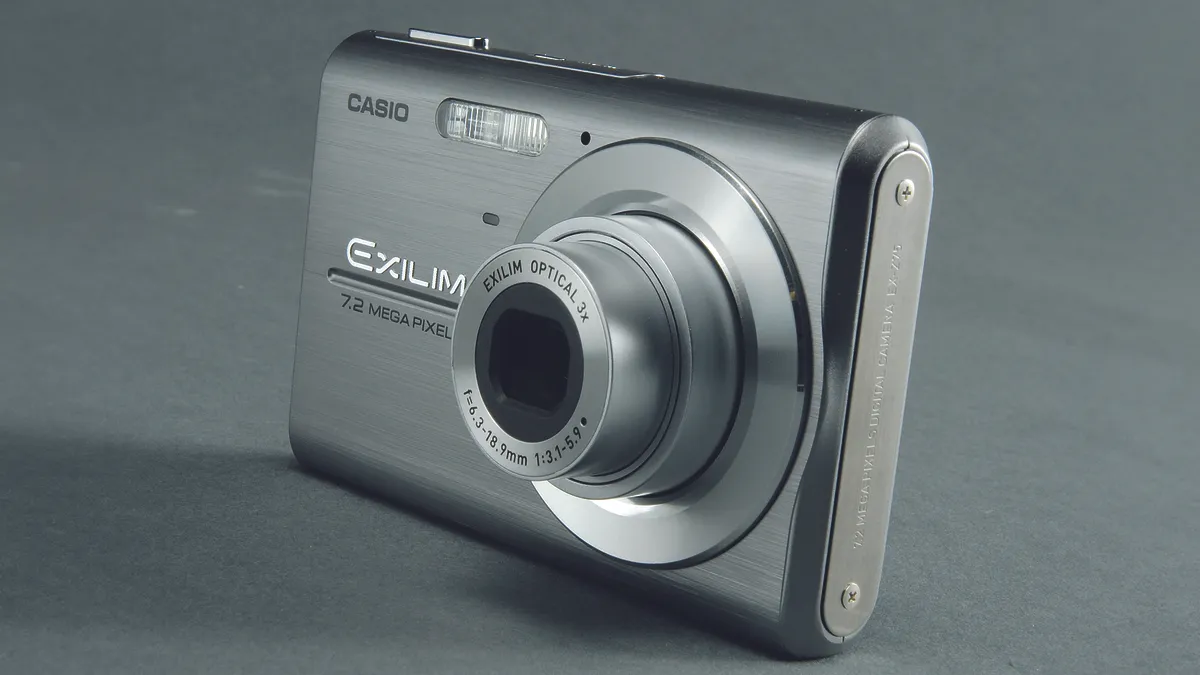
In 2002, Casio introduced the Exilim line, beginning with a series of exceptionally thin cameras such as the EX-S1. It described the idea as a "wearable card camera": instead of taking a camera with you because you planned to photograph something, the camera was small enough that you simply carried it all the time. Again, Casio was anticipating the smartphone.
The early Exilim cameras were remarkably thin and stylish. Over the following years, Casio became particularly good at making cameras that were fast to start, fast to operate and easy to carry.
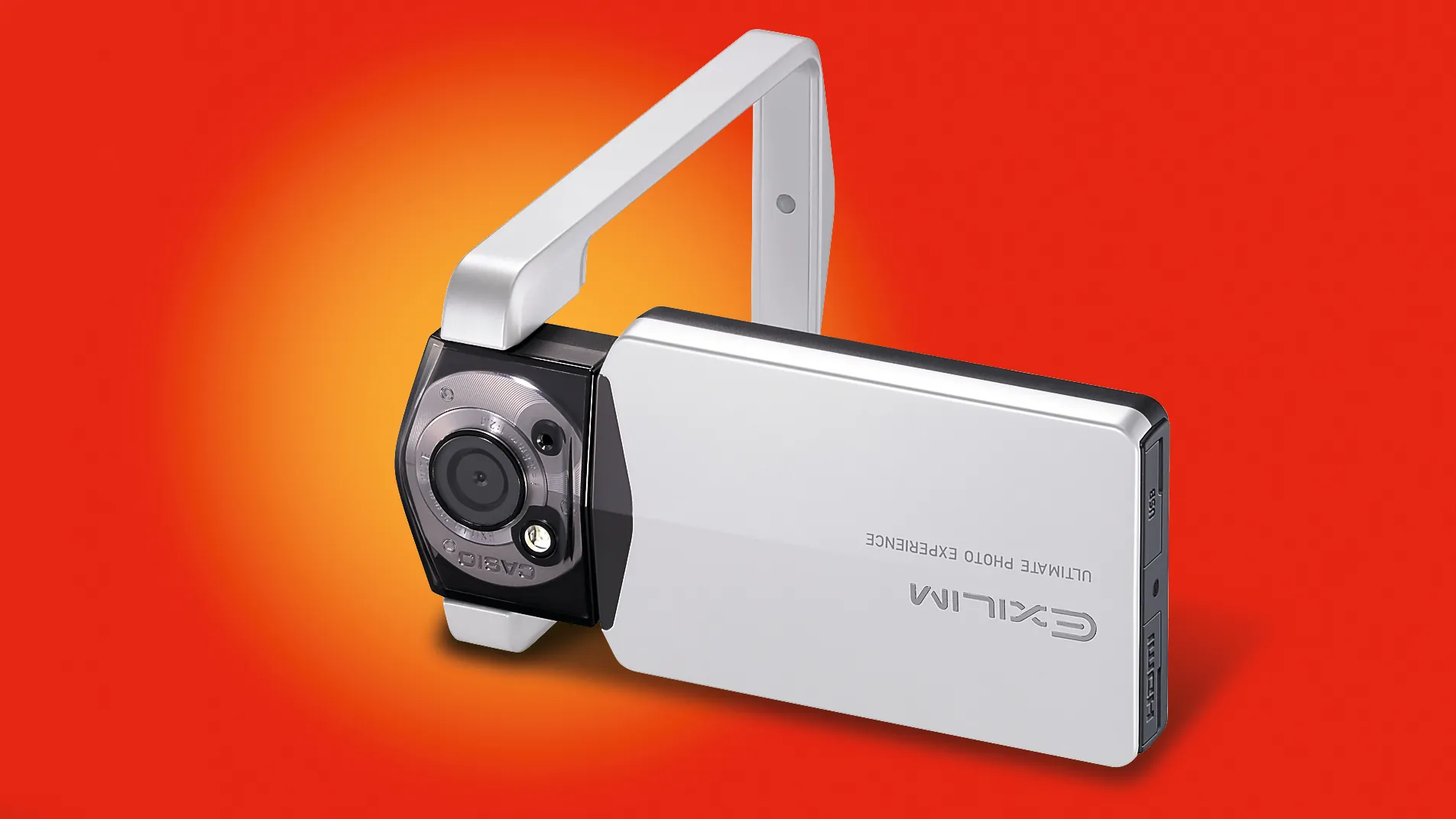
In 2011 it made another remarkable camera, the Casio EX-TR100 – sold in North America as the Tryx. Its screen and surrounding frame could rotate into numerous positions, enabling the camera to stand on a table, hang from something or easily point toward its owner. Initially, the concept didn't take off… until something unexpected happened in Asia.
After photographs from the camera were posted by a Hong Kong fashion model, it rapidly developed a reputation for producing flattering self-portraits. Casio itself says the cameras became particularly successful among women in China and Southeast Asia, and acquired the nickname roughly translated as the "goddess selfie device" – and almost single-handedly started the selfie craze!
So, with all this innovation and success, what happened? After all, in its 23-year run, Casio sold an estimated 70 million cameras. Well, the answer was the same as for every other camera company: the camera phone.
Canon, Nikon, Sony, Panasonic, Olympus, Pentax and Fujifilm had professional and semi-professional cameras with larger sensors and interchangeable lenses with which to weather the storm. Casio didn’t.
In 2017, Casio’s camera business lost about ¥500 million – that's roughly $4.5 million / £3.5 million / AU$5.8 million at 2017 exchange rates. So in 2018, after 23 mostly successful years, Casio simply stopped making cameras.
Its cameras had shown the way to the future – and that future had finally arrived to make them redundant.
Read more of David Young's ongoing series on classic cameras, as well as his book A Brief History of Photography.
You might also like…
Take a look at the best point-and-shoot cameras you can buy today

