Digital Camera World Verdict
The 3 Legged Thing Lexie QD makes life easier (and more affordable) for people like me, with more than one camera in their life. It’s easily adjustable to fit pretty much any DSLR or mirrorless camera, so you can use it with multiple bodies, or just keep on using it if you trade your camera in for a different model. Like the original Lexie, it’s beautifully made and works a treat. However, the newer ‘QD’ edition adds a Quick Detach socket and works better with the company’s XPAND system. It’s a brilliant L-bracket, now even better.
Pros
- +
Great performance and value
- +
Universal fit
- +
Aerospace-grade magnesium alloy
- +
New QD compatibility
- +
Extended XPAND compatibility
Cons
- -
No Toolz2 multi-tool included
Why you can trust Digital Camera World Our expert reviewers spend hours testing and comparing products and services so you can choose the best for you. Find out how we test.
You can’t beat an L-bracket for convenience if you want to shoot in landscape and portrait orientation when using a tripod, while maintaining precisely the same shooting position. An L-bracket also ensures an optimum center of gravity in portrait orientation shooting, rather than your camera hanging off to one side of your tripod head. However, I have a problem. I’m a bit of a camera addict and have quite a few in my current collection. 3 Legged Thing makes dedicated L-brackets for a vast range of specific bodies, but buying an L-bracket for each and every camera would be a costly business.
The original 3 Legged Thing Lexie solved the problem with its universal design. Thanks to easy adjustability, you could tailor it to fit just about any camera in just a couple of minutes. One size really does fit all. I’ve been using one for years and didn’t really think it could be improved upon. I was wrong. The new Lexie QD adds a Quick Detach socket and is an even better fit for the 3 Legged Thing XPAND system, which I’ll come to a bit later. The new Lexie definitely has her eyes on the prize for being one of the best L-brackets on the market, as well as one of the most adaptable and versatile.
3 Legged Thing Lexie QD: Specifications
Material |
Magnesium alloy |
Base length |
94mm / 3.7in |
Working base range |
94-124mm / |
Vertical aspect height |
84mm / 3.3in |
Vertical aspect width |
38 mm / 1.5in |
Shoe compatibility |
38mm / 1.5in Arca-Swiss |
QD socket |
Yes |
XPAND compatible |
Yes |
Weight |
92g / 3.2oz |
3 Legged Thing Lexie QD: Price
Everything’s going up in price nowadays, even more so when a ‘new and improved’ replacement comes along. Bucking the trend in a surprisingly budget-friendly move, the new Lexie QD costs $60 / £50 / AU$129. That’s pretty remarkable, considering that the original version of the Lexie universal L-bracket still lists for a more expensive $65 / £60 / AU$138 (although you might be able to pick up one of the last few remaining on special offer if you’re quick). Either way, I reckon the new Lexie QD is excellent value for money, if the features, build quality and performance all hold up. Let’s find out…
3 Legged Thing Lexie QD: Design & Handling
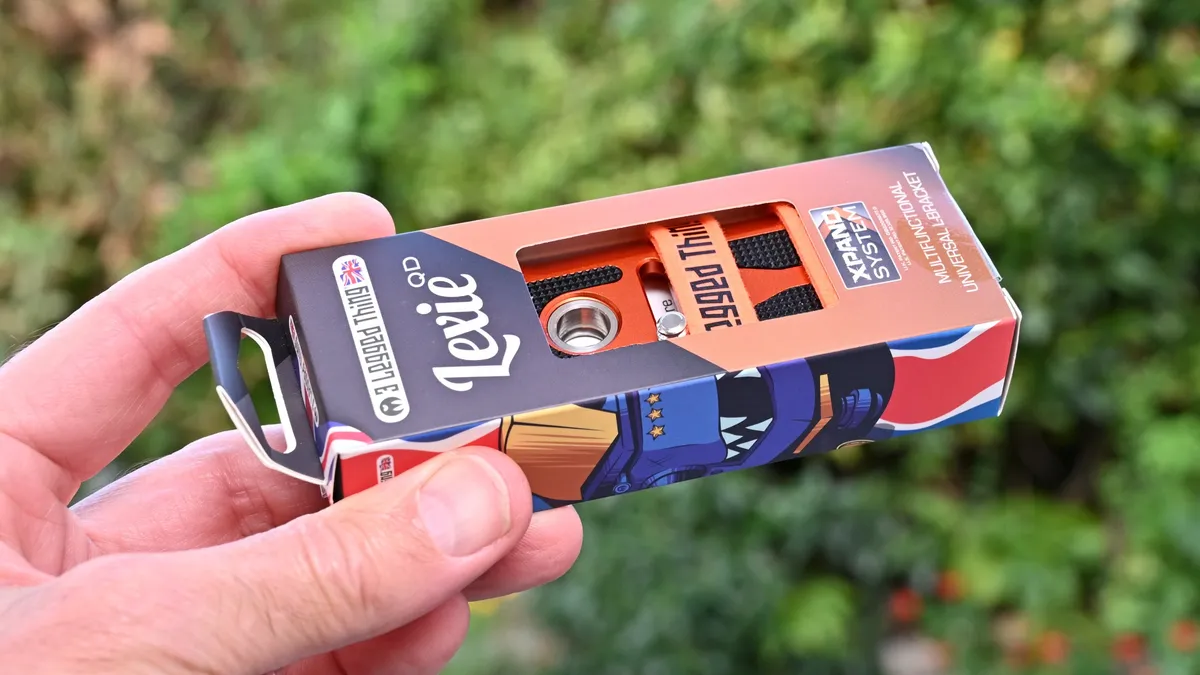
Some people like bright colors; others prefer to go to the dark side. The Lexie QD caters to different tastes, being made in alternative orange and black options. Both are engineered from aerospace-grade magnesium alloy, with stainless steel QD sockets and screws, and anodized in their respective colors. Naturally, the different colorways match up with 3 Legged Thing’s tripods, monopods, heads, and other accessories in its extensive catalog.
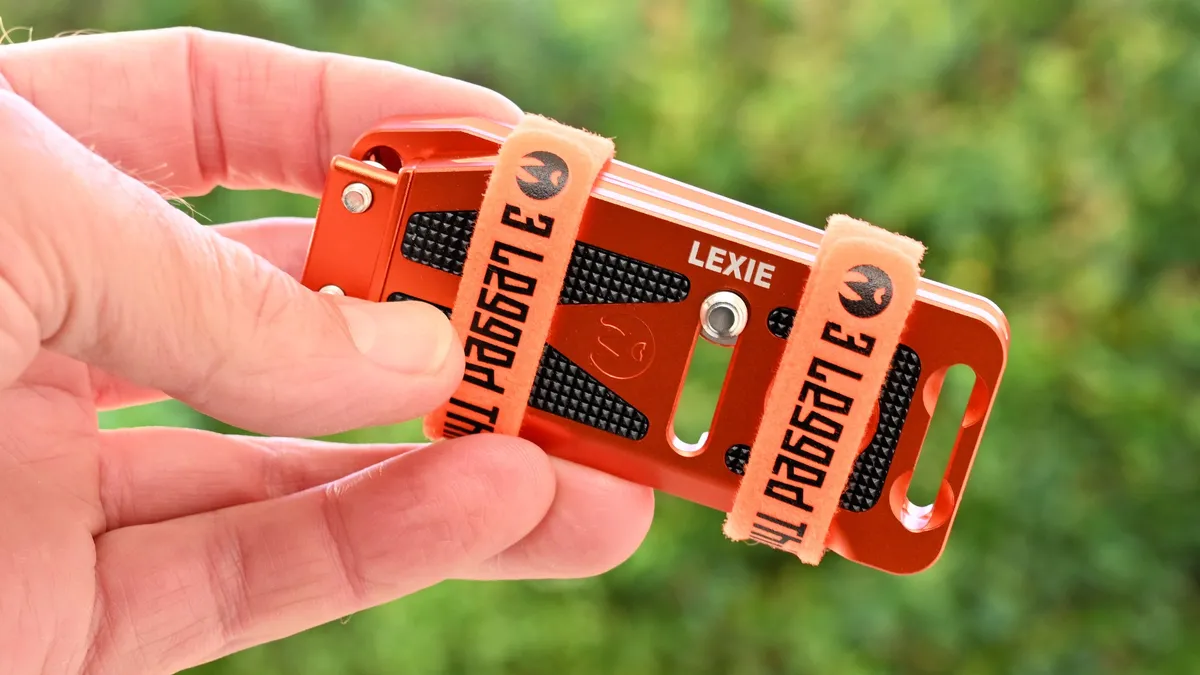
The base plate is where all of the new design work and re-engineering is focused. Instead of having a strap loop at one end, the new plate features an XPAND Triple Axis Slot instead, plus a new QD socket in its main body. More on those later.
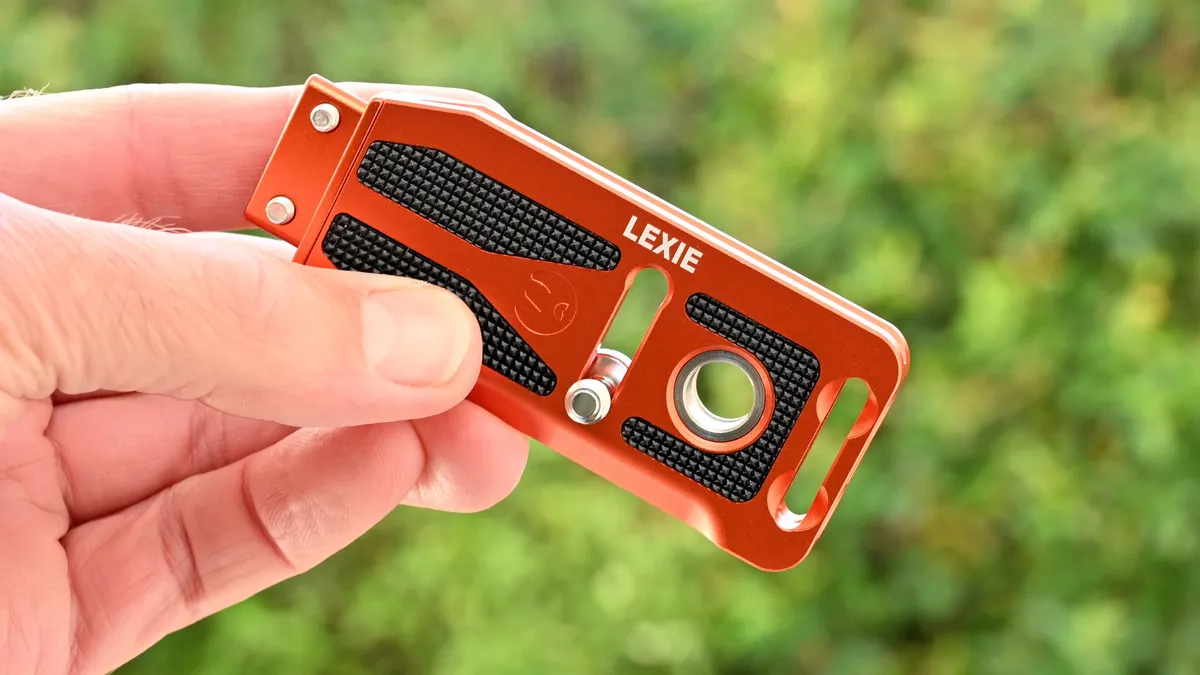
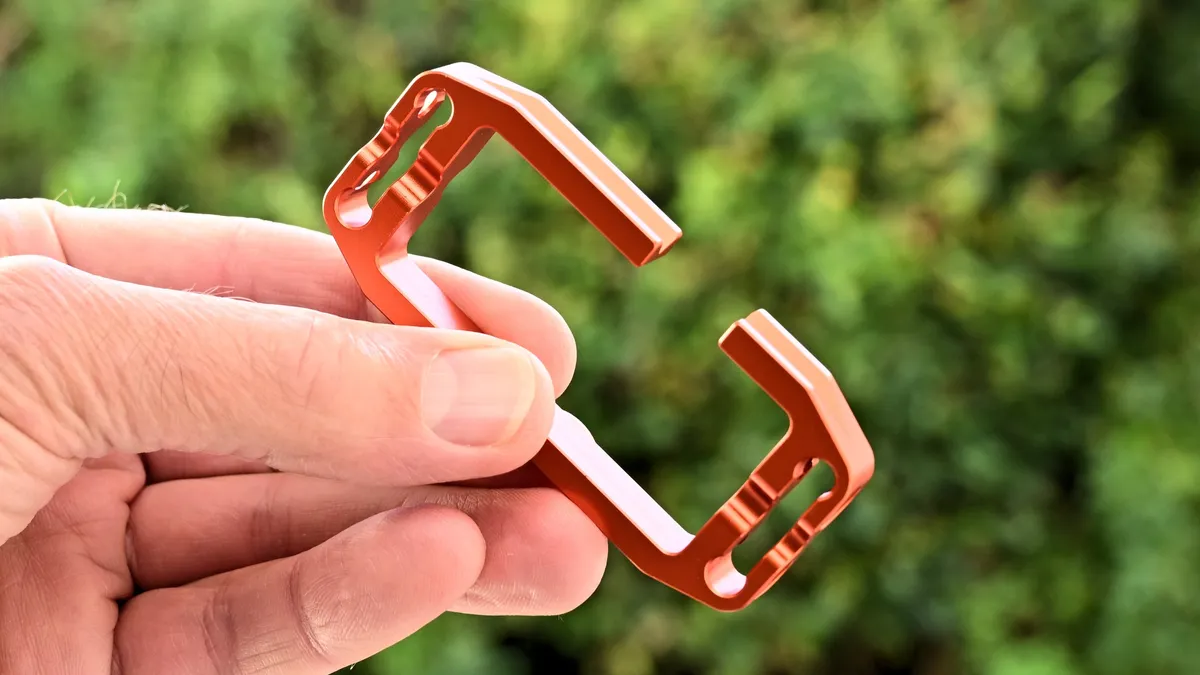
As far as I can tell, the upright plate is identical to that of the original Lexie, which is no bad thing. It has a similar connection system to the one featured at the outer end of the base plate, but placed at both the top and the bottom of the upright. There’s also a cutout on one side for cable management. Continuing the ‘universal’ theme of the L-bracket, you can position the cutout in any of four different placements, tailoring it for the best fit.
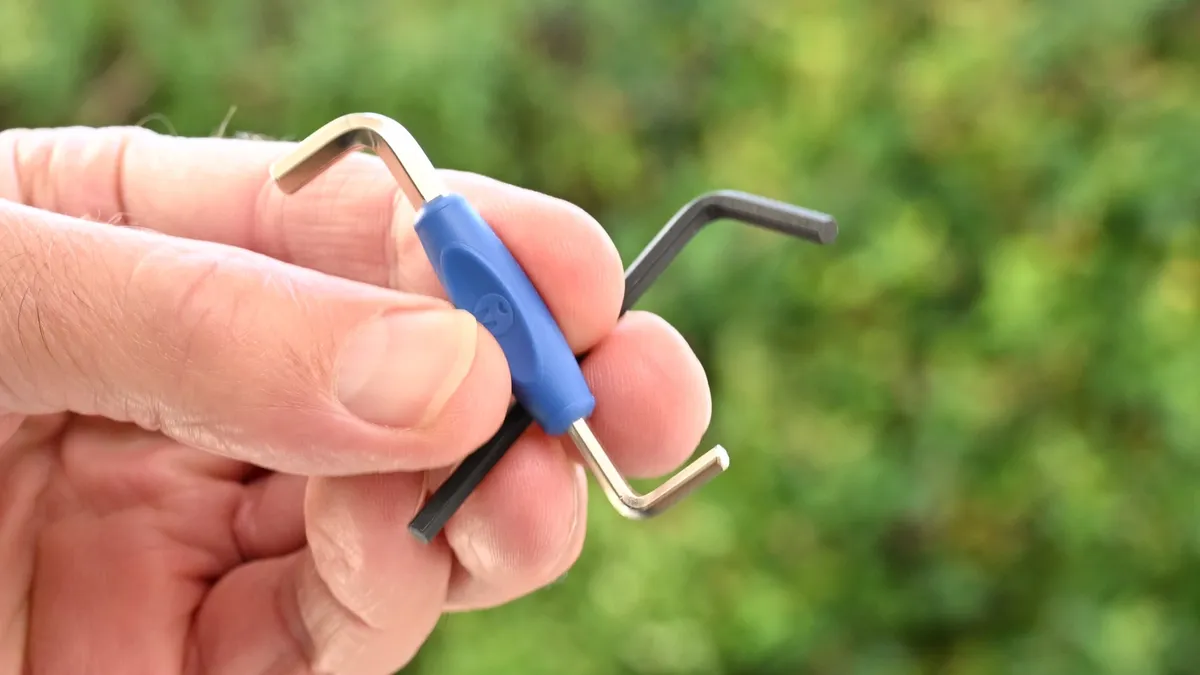
To adjust the length of the base plate to suit your camera and to connect the base plate and upright together, there are two different sizes of hex-head screws. A third size is used for the camera mounting screw. My only slight niggle is that while 3 Legged Thing supplies a neat dual-size hex key in the kit, there’s also a separate, more basic hex key in the pack for adjusting the length of the base plate. Naturally, this means carrying an extra hex key around with you if you need to alter the base plate length for a different camera. I’d have preferred to see the smart 3 Legged Thing Toolz2 included in the kit, which features all three sizes of 4mm, 3mm, and 2.5mm hex keys, plus a coin key, bottle opener, and both carabiner and keyring attachments. It’s a great little gadget, well worth the extra $8 / £8 / AU$11 to buy it separately.
Crucially, the base plate and upright join together with a really firm and secure fit, so there’s no hint of wobbling or unsteadiness. In the shortest configuration of the base plate, the upright fits flush to one side, as shown in the image below.
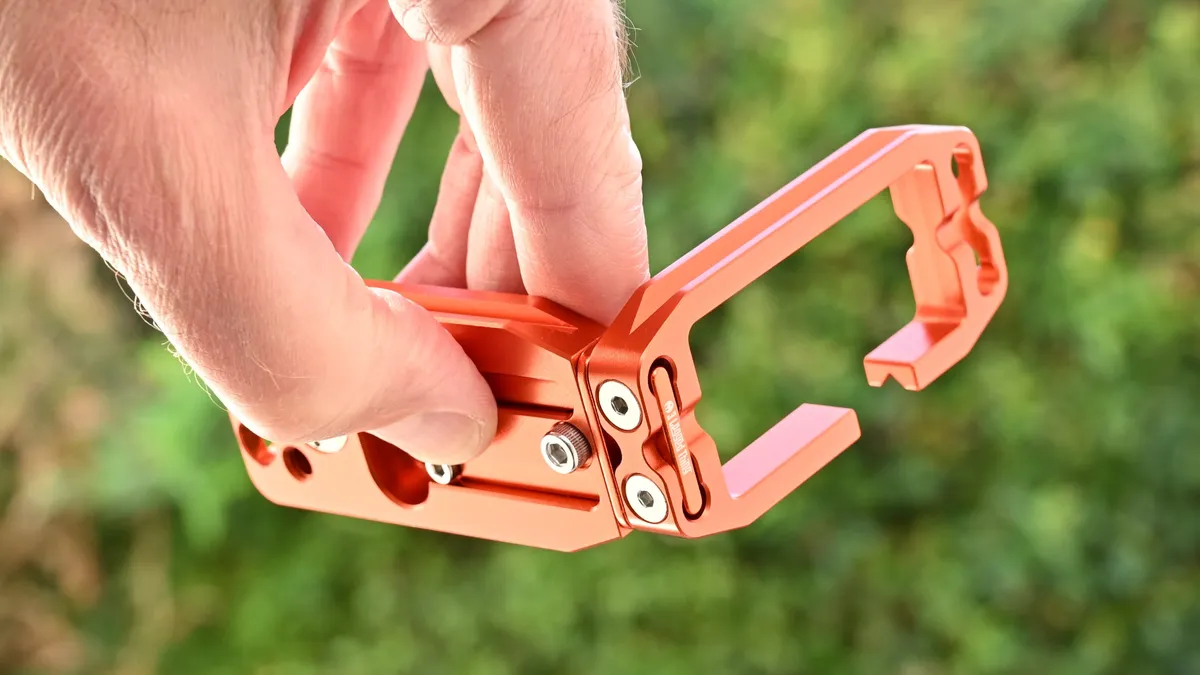
To ensure universal appeal, the extendable inner part of the base plate has no fewer than seven alternative screw holes. You can rest assured that it won’t pull out too far and drop off when making adjustments, thanks to two additional safety screws that you can see in the following image.

Whereas the base plate of the original Lexie had two slots for securing a camera, the QD edition has just one. That certainly shouldn’t be a problem and, again, it comes with a stainless steel ‘Stagsden’ camera mounting screw (Stagsden being the historic home village of 3 legged Thing in the UK). The screw can be fastened with either a coin key or a hex key, but there’s no D-ring for just using a finger and thumb.

Shown just next to my thumb in the image below is the new stainless steel QD (Quick Detach) socket. If the system is new to you, it’s a type of quick and easy yet extremely secure fixing that’s used by an increasing number of companies (including NASA, for securing cargo on space rockets). A simple press of a button is all you need to release whatever’s plugged into the socket.
A good choice for the socket in the base plate is one of the 3 Legged Thing Axis camera straps, which include neck, crossbody, harness, wrist, and backpack options. This enables you to quickly and easily swap between shooting handheld with a neck strap or wrist strap, or removing the strap so that it doesn’t dangle down when mounting the L-bracket on a tripod or other support.

With the base plate and upright joined together, there are XPAND Triple Axis Slots at both free ends of the L-bracket, as shown in the image below. These are fully compatible with the 3 Legged Thing XPAND system. If you need an introduction, it’s a system that features cheese plates, risers, and other magnesium alloy components, so that you can build your own fully customized cage or rig. It’s a bit like Meccano for camera supports. The base plate and upright also feature additional 1/4-inch threaded sockets for attaching the likes of magic arms, LED lamps, mics, and other accessories.

By way of example, when I used the Lexie QD with my Sony A7 III camera, I extended the sliding inner part of the base plate so that the third threaded socket was used for locking the upright in place. You’ll notice this in the image below, which also shows the two 1/4-inch threaded sockets for attaching accessories.

A problem when using any L-bracket is that the various connectivity ports of your camera can become inaccessible because they’re obscured by the upright’s metalwork. With so many different makes and models of cameras on the market, this can be more of a problem with a ‘universal’ L-bracket that isn’t designed for a specific body. However, I found that all of the ports of my Sony camera were accessible, and that I could open and close the weather flaps with the camera fixed to the L-bracket.

The final item in the kit of parts is a drawstring pouch. It’s nicely made, bears the 3 Legged Thing logo, and is useful for stashing the L-bracket and its incumbent tools when they’re not in use.

3 Legged Thing Lexie QD: Performance
I’ve always been impressed by 3 Legged Thing’s dedicated L-brackets. Designed for use on specific camera bodies, they’re made from a single piece of magnesium alloy. As such, there are no separate parts with joints between them that are potential weak points. These dedicated L-brackets are wonderfully rigid and inflexible.
My worry with the Lexie QD is that it’s basically two separate plates joined together. Actually, make that three plates if you include the sliding inner part of the base plate, which enables the ‘universal’ fit. My concerns turned out to be unfounded, as I found that the Lexie QD remained incredibly robust and resistant to any unwanted flexing or twisting when assembled and in use.

Any weakness or wobble in the joints becomes more apparent when shooting in portrait orientation rather than landscape orientation. In this configuration, the upright is mounted on the tripod, and the camera is still mounted to the base plate, putting more stress on the joint that connects everything. Throughout my extensive testing with different camera models and different sizes and weights of attached lenses, I found that the Lexie QD remained absolutely stable and rigid.

Finally, the Arca-Swiss profile of both the base plate and upright enables quick and easy swapping between portrait- and landscape-orientation shooting, as well as maintaining an ideal balance. And that’s really the main point of an L-bracket, after all.
3 Legged Thing Lexie QD: Verdict
In the land of L-brackets, I think that Lexie QD is the reigning queen of versatility. It’s not just that the new 3 Legged Thing bracket is universal and able to quickly and easily adapt to fit almost any camera. And it’s not just that the Lexie QD combines effortless adaptability with rock-solid support and robust, rigid performance that never falters or flexes. The upgrades that elevate the QD edition above the original version are that versatility is taken to new dimensions.
First up, the addition of a QD (Quick Detach) socket makes it effortless to swap between tripod-mounted shooting in either landscape or portrait orientation, and handheld shooting with the security of a 3 Legged Thing Axis camera strap that simply plugs into the QD socket. You can also add other compatible accessories to the QD socket, and it’s equally quick and easy to detach them again, as its name implies.
Secondly, there’s also enhanced compatibility with the 3 Legged Thing XPAND system, going a fair way beyond what was possible with the original version of the L-bracket. That’s thanks to XPAND Triple Axis Slots being featured on the spare end of the base plate, instead of just on both ends of the upright. To seal the deal, the Lexie QD costs even less to buy than the original, making it great value for money.
Features ★★★★★ |
Going above and beyond the remit of an L-bracket, the Lexie QD is full of features, including a QD socket and enhanced XPAND compatibility. |
Design ★★★★★ |
The ‘universal’ approach enables fitment to pretty much any camera, while excellent design and build quality ensure that rigidity isn’t compromised. |
Performance ★★★★★ |
Although the L-bracket made from separate magnesium alloy components that connect together, rather than from a single piece of metal, performance is rock-solid. |
Value ★★★★★ |
Amazingly, this new and improved version of the Lexie has a lower recommended price than the original edition, making it great value. |

Alternatives