





Has Sony just kneecapped its best professional camera?
The company has a brilliant flagship, the Sony A1 II, which marries 30fps speed with 50MP resolution. However, with the launch of the Sony A7R VI – which offers 30fps and 66.7MP resolution – you have to ask whether the A1 II is still Sony's top dog. The alpha, if you will.
And that's exactly what we did on the latest episode of the DCW News Podcast, where I was joined by my colleague Hillary Grogonis who has extensively tested Sony's new pixel-packed powerhouse. You can watch the full episode embedded below.
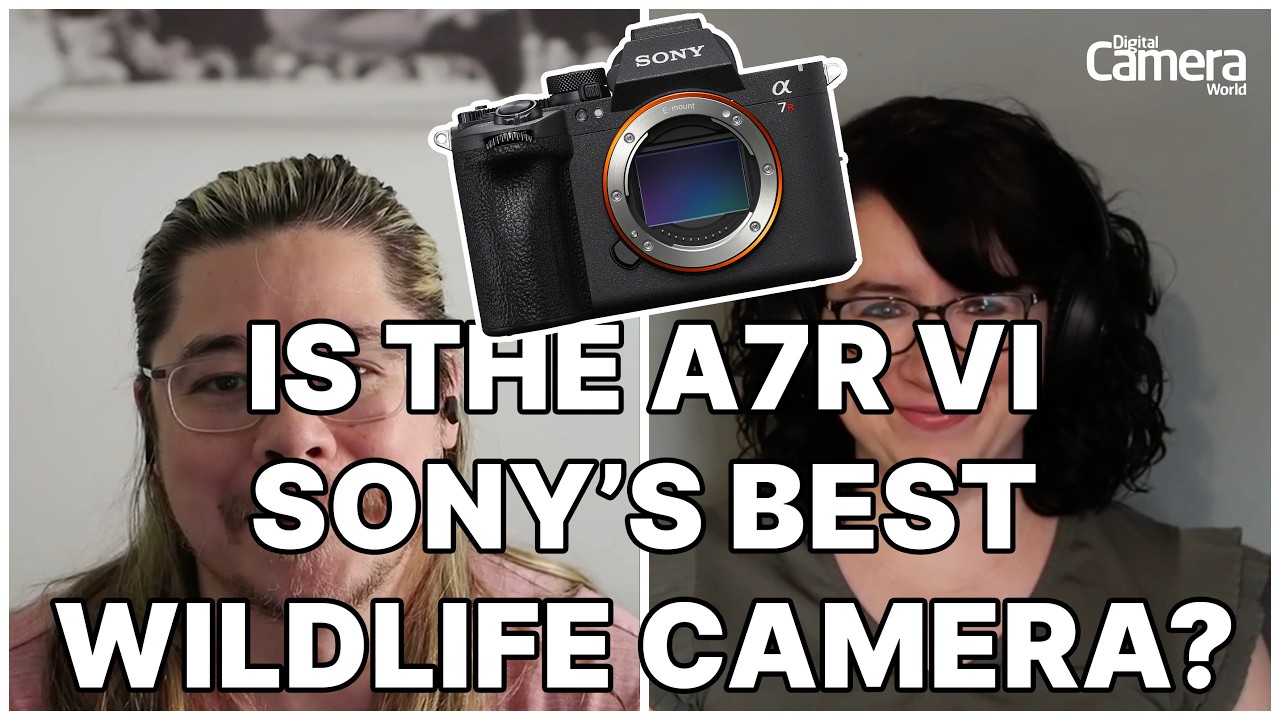
ABOVE: Watch the Sony A7R VI discussion
James: I kind of wonder, first of all, is this Sony's best wildlife camera? And also, does it make the A1 kind of pointless now? Because it exceeds the A1 in terms of resolution, it's got a 30fps burst, so what does this do to the Sony product lineup? It feels like everything's a little bit out of kilter now."
Hillary: It definitely feels like Sony has really narrowed the gap between their different options. So, one of the biggest differences as far as wildlife and sports goes is [the A7R VI] is going to keep that 30fps for a lot longer. It's got a much bigger buffer on it. I believe the A1 II can shoot at 30fps second for up to 240 RAW frames, and the A7R VI is 150 frames. So, quite a difference there.
How about that 66.7MP resolution – it's not that many more pixels than the 61MP Sony A7R V. Does it really make that big a difference?
Hillary: I kind of thought that the 67MP was the least exciting thing about the camera, to be honest. That stacked sensor, that speed is not common with something with such a high resolution. So, I was really excited about that stacked sensor.

James: Here's a consideration. So, 67MP in general, that's going to give you some big image files. If you're going to shoot this even at 15fps, let alone 30fps, you're going to end up with a whole bunch of high-res files. What does this mean in terms of storage? You've shot enough wildlife with this thing to have an idea. How much did it make your hard drive hurt?
Hillary: I think my hard drive cried a little bit, to be honest. But, I also think Sony has a unique solution here; just because it shoots at 30fps doesn't mean you mean you need to shoot at 30fps the whole time. They added the option to customize one of the buttons, in order to trigger a temporary 30fps burst.
So when I was photographing a bird and it was just sitting there on a branch, not really moving a lot, I don't need 100 photos of it. I could shoot at like 5fps, 10fps. And then, you know, if something happened, all I had to do was one press of the button and it was shooting at full speed again.
I think that's a really clever workaround, the option to shoot fast when you need it and slower when you don't, cause storage is going to be a big problem with the cost of hard drives and memory cards.
We talk plenty more about the Sony A7R VI – the $4,500 price tag, autofocus performance, missing features like open gate video, whether Sony A7R V users should upgrade, how Canon and Nikon will respond – on the DCW News Podcast, so check out the full discussion!
You might also like…
See how the A7R VI fares against the highest resolution cameras on the market, as well as the best Sony cameras across the entire range.

