For most of photographic history, the camera didn't treat every human skin tone equally. Early references cards featured only white women, and so chemical emulsions and exposure standards were optimized for those skin tones. Pictures of darker skinned people, in turn, were often underexposed, poorly balanced or lacking distinct facial features.
Kodak finally introduced multiracial reference cards in the mid-1990s, just as digital photography was emerging. This new tech did not, though, automatically fix the problem. The same historical biases were simply coded directly into the new sensors, algorithms and editing software.
It's only recently that true fixes have starting arriving, led by Google's Real Tone, introduced in 2021, with other smartphone makers quickly following suit.
Among them were Chinese brand TECNO, whose Universal Tone technology officially began launched in October 2023.
Two-year project
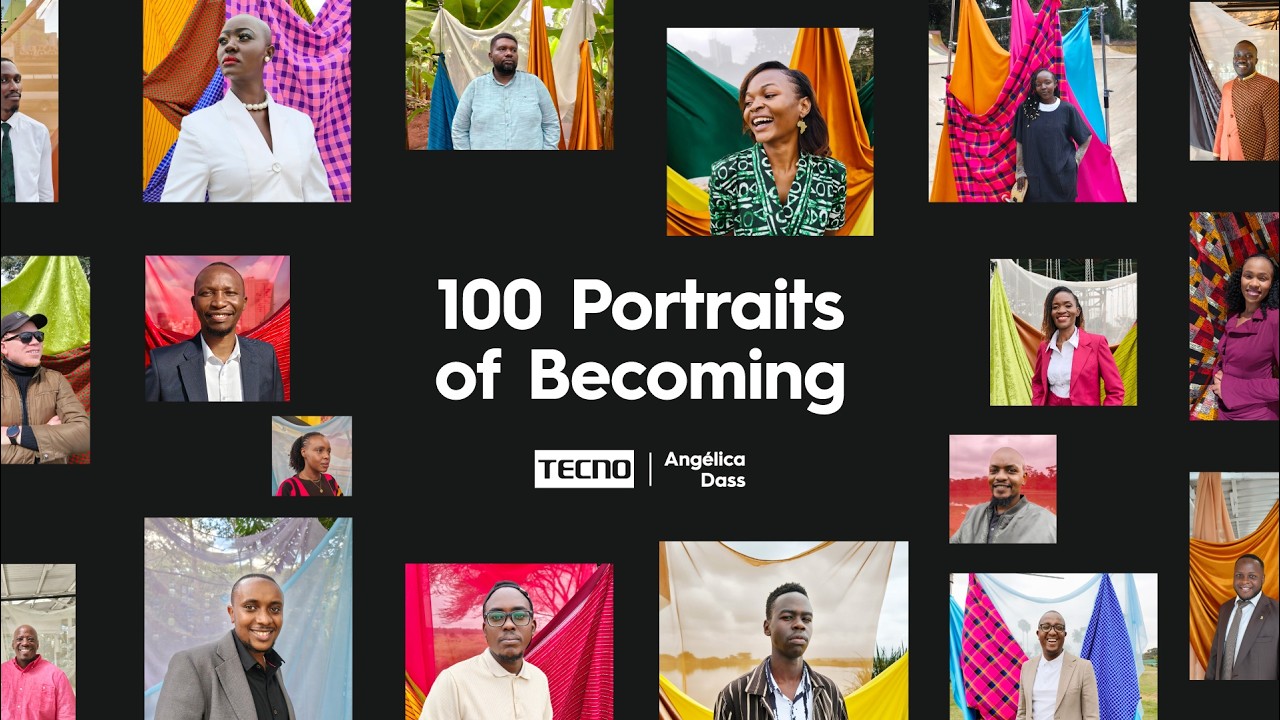
This is the backdrop to 100 Portraits of Becoming, a two-year project from visual artist Angélica Dass, paid for by TECNO, spanning Kenya, the Philippines, Saudi Arabia, Turkey and Brazil.
On the one hand, this is clearly a marketing campaign; shot on TECNO's Camon 50 Ultra 5G and presented as branded posters with logos and quotes. But at the same time, Dass is a serious artist, and the questions she's asking here good real ones, so it's well worth paying attention to.
Dass is certainly a smart pick, as she's best known for Humanæ, a long-running project in which she photographs people against backgrounds matched to the exact Pantone shade of their skin. Lined up together, the portraits make a powerful point: no one is really "white" or "black", and these labels seem quite odd when you look at the actual color of people's skin.
This later project takes that idea beyond skin tone and into identity. As Dass puts it in the introductory video: "A photograph can put a label on you, or it can take every label away."
First-person stories
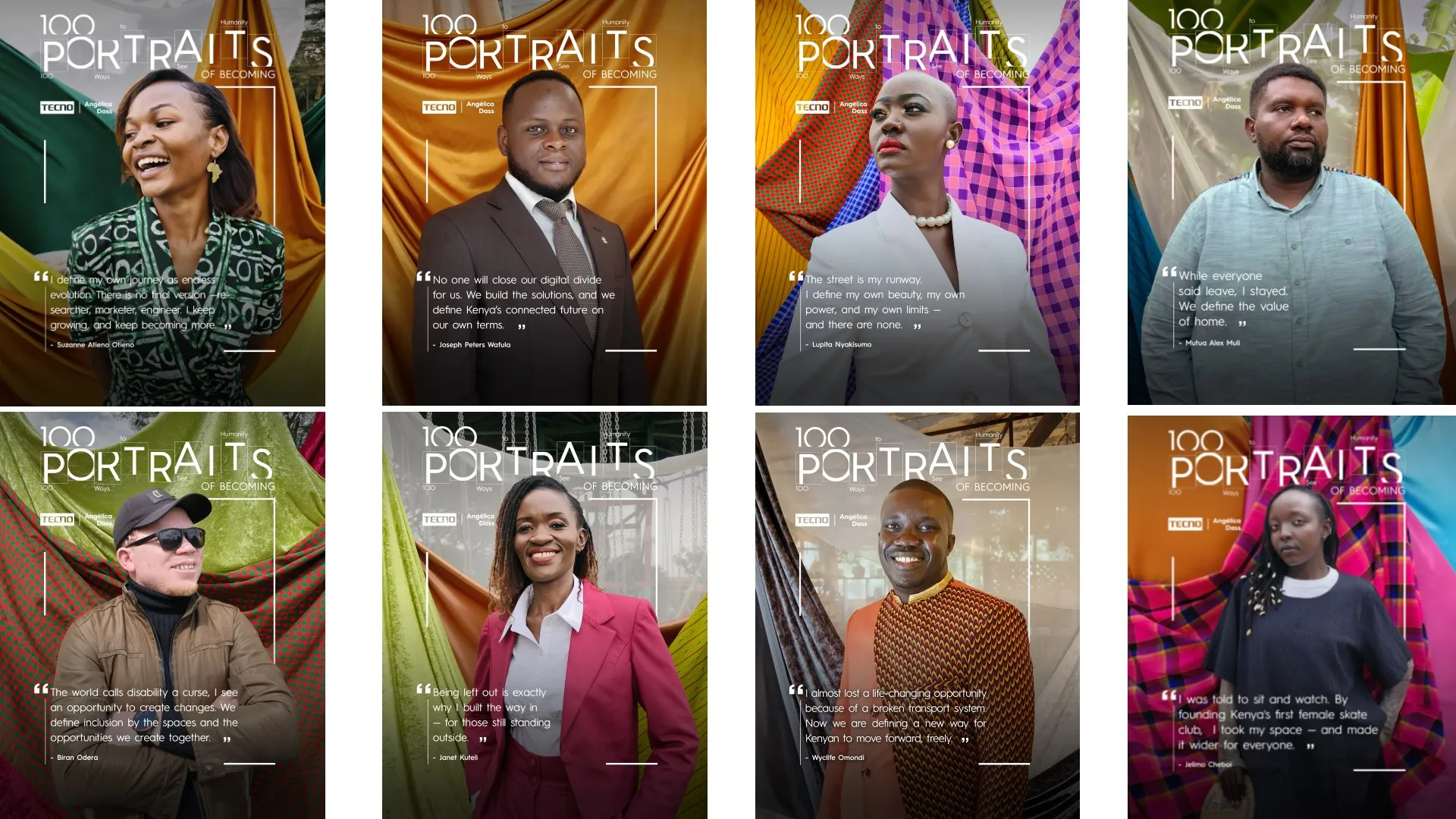
The first 20 portraits are now live. They've all been shot outdoors in Kenya against boldly draped fabrics, and each is accompanied by a first-person story about the subject.
Alex Mutua Muli, for example, watched a neighbour cut down an entire mango orchard when he was 14 because there was no market for the fruit. While everyone told him to head for the city, he stayed and co-founded a company turning local produce into dried fruit for bigger markets.
Jelimo Cheboi took up skateboarding in 2022 and, finding it heavily male dominated, grew GirlSkate Nairobi from a WhatsApp group into a thriving community. Elsewhere, Brian Muchiri talks about refusing to be defined by his wheelchair, while Phillip Mbuthia Ranja, a creator across several disciplines, credits dyslexia with helping him to see differently.
"Every image shapes assumptions – why it matters, who matters and how people are understood," says Jack Guo, general manager of TECNO. "That makes fair and accurate representation increasingly important in the AI era." Quite. But it's also worth pointing out that fundamentally, this project is about people, not processing.
"Kenya showed me that meaningful portraits are never created by technology alone," says Dass. "They begin with trust, with listening, and with the generosity of the people who choose to stand in front of the camera. The camera is simply the tool that allows those encounters to be shared."

