




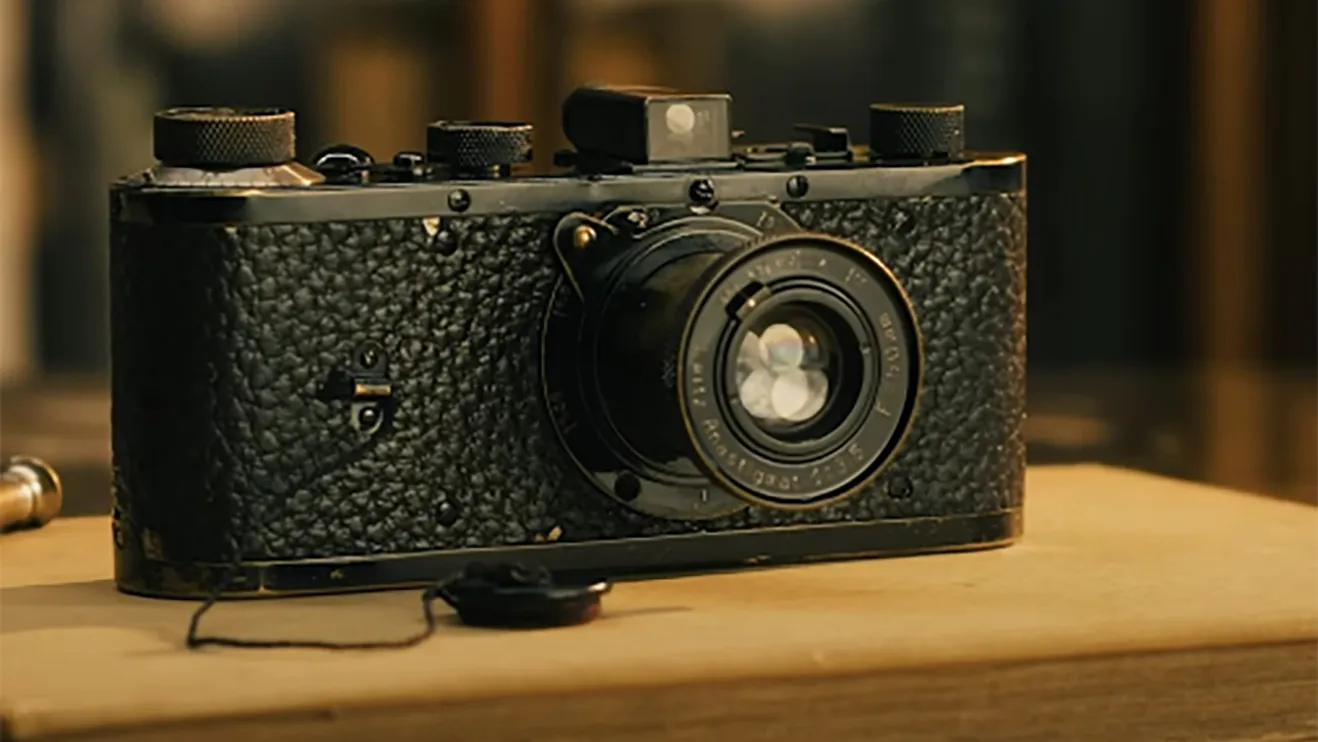
A camera that helped shape the future of photography has just sold for an extraordinary US$4.9 million (£3.7 million / AU$7 million / €4.25 million) at Wetzlar Camera Auctions in Germany, proving once again that when it comes to Leica, some pieces of photographic history are almost priceless. The Leica 0-Series, dating back to 1923, went under the hammer on October 10, 2026, becoming one of the most expensive cameras ever sold at auction.
You can watch the moment the camera sells in the Wetzlar Camera Auctions Instagram video.
The camera, serial number 103, was offered as Lot 3 with a pre-sale estimate of between €1.5 million and €2 million, but it quickly became clear that collectors were prepared to go considerably further. Following a reported 20-minute bidding battle between telephone bidders, the final price reached an incredible €4.25 million, more than double its upper estimate. And while that figure might seem difficult to comprehend for a camera more than a century old, its importance to the history of photography is almost impossible to overstate.
Produced in 1923, two years before Leica officially introduced its first commercially available 35mm camera, the 0-Series was an experimental run of just 22 to 25 cameras designed to test a completely new approach to photography. Of those original examples, only 16 are believed to survive today, making them among the rarest and most desirable cameras ever produced. These weren't simply early examples of a famous camera, either. They were the machines that helped establish the foundations of the Leica system we know today.
Developed from the pioneering work of Oskar Barnack at Ernst Leitz, the 0-Series cameras were created to evaluate the practicality of using 35mm film in a compact, portable camera. At a time when photography was still dominated by considerably larger and less convenient equipment, the idea of putting a capable camera into something that could comfortably be carried almost anywhere was revolutionary. The success of these experimental models ultimately helped convince Ernst Leitz II to approve production, leading to the introduction of the Leica I in 1925 and changing photography forever.
What makes this particular example even more remarkable is its provenance. Serial number 103 was the third camera produced in the experimental series and had reportedly remained in a private American collection for more than 50 years. For collectors, that combination of historical significance, extraordinary rarity and originality is precisely what makes these early Leica cameras so valuable. This isn't simply a camera that happens to be old; it is a surviving piece of the very beginning of modern 35mm photography.

Of course, this isn't the first time an early Leica has commanded an astonishing figure at auction. In 2022, another 0-Series camera, serial number 105, sold for a record-breaking €14.4 million, demonstrating just how fiercely collectors compete for these incredibly rare prototypes. The latest $4.9 million (€4.25 million) sale might not have broken that record, but it is another reminder of the remarkable value attached to Leica's earliest creations.
As someone who has used Leica cameras for years, both film and digital, I find the historical significance of these early models fascinating. There is something quite extraordinary about looking at a camera made over 100 years ago and recognizing the beginnings of a philosophy that still influences Leica's designs today. The simplicity, compactness, and emphasis on the photographic experience are all ideas that can be traced back to these pioneering cameras.
While $4.9 million (€4.25 million) is a staggering amount of money to spend on a camera, I would argue that what the successful bidder has purchased is far more significant than the camera itself. They have acquired a tangible piece of photographic history, one that helped change the way we see and document the world.
Check out the best Leica cameras you can buy new today

